New job search experience
Improving the most important feature at Graduateland
Overview
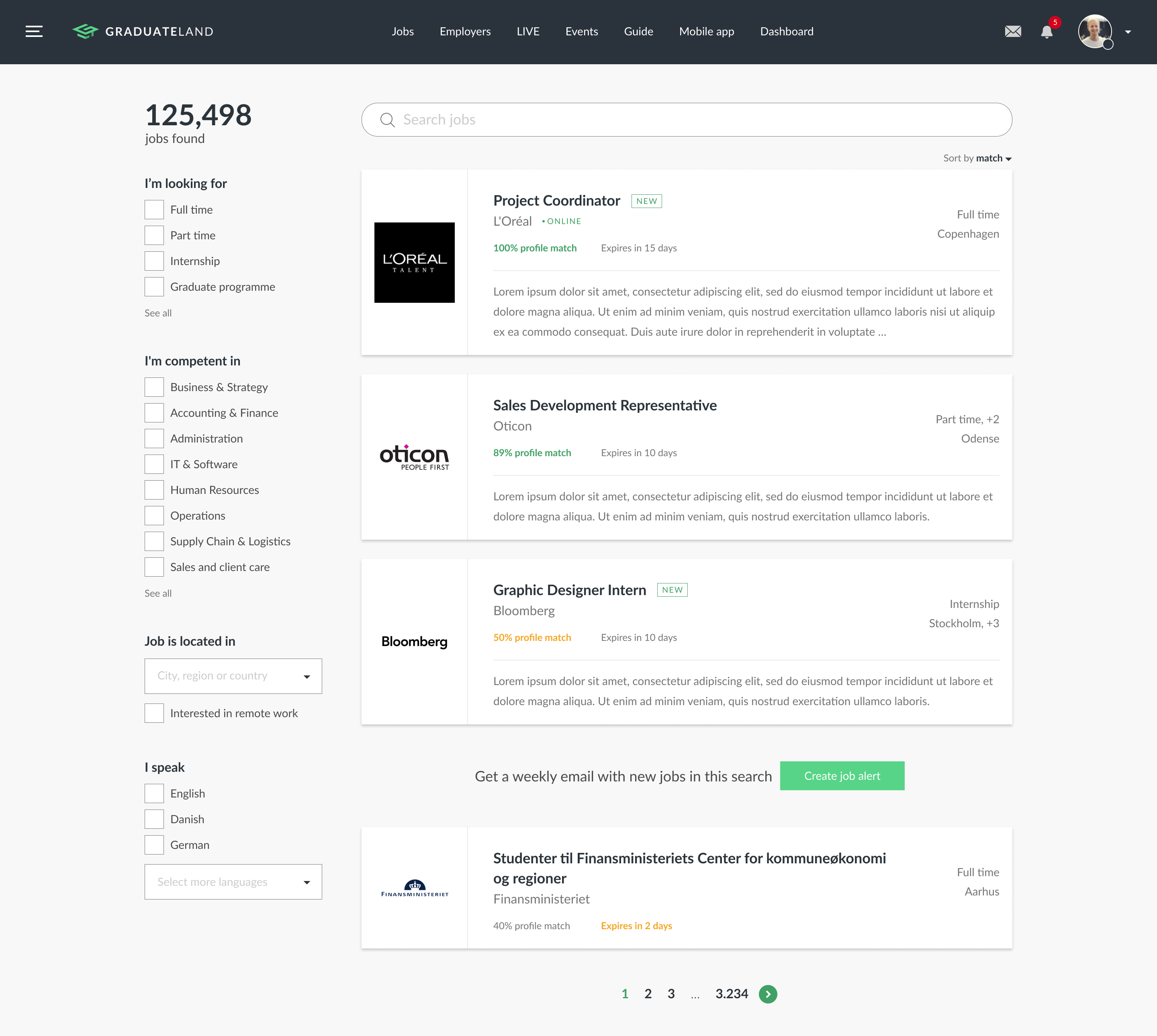
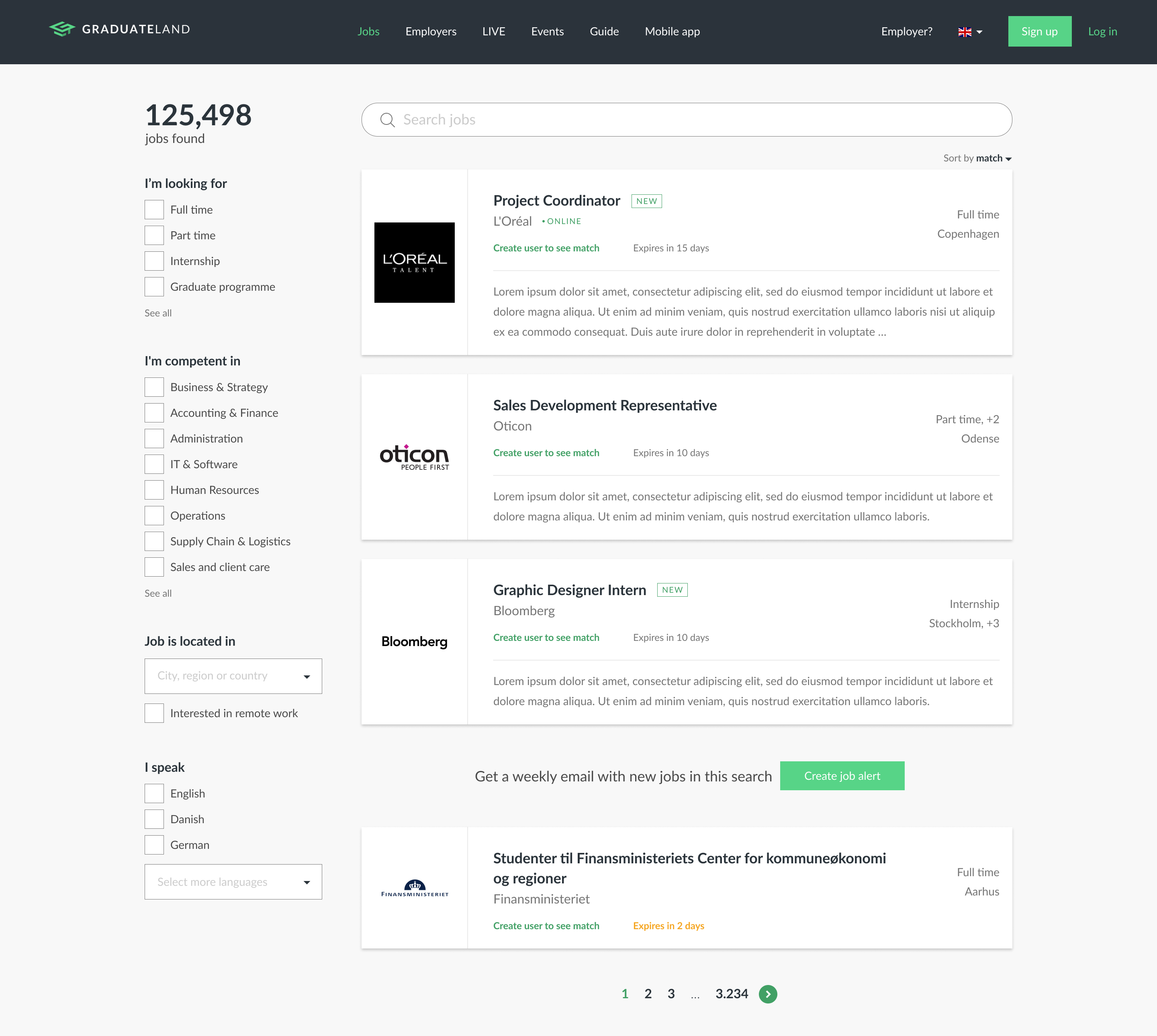
As Lead Product Designer at Graduateland, I improved the job search experience. It is a core feature that connects candidates with relevant job opportunities and drives engagement across the platform. The challenge was to modernise an outdated experience and support both targeted searches and exploratory browsing. The work focused on identifying usability issues and redefining how users search, filter, and engage with job listings across devices.
My roleOwned UX and UI design for the job search experience.PlatformWeb platform · Mobile app (React Native)FocusRecruitment · Search and discovery · Interaction design · Usability testing · Remote testing · UX researchOutcomeImproved job discovery and engagement by redesigning search, filtering, and browsing experiences.Year2019
The problem
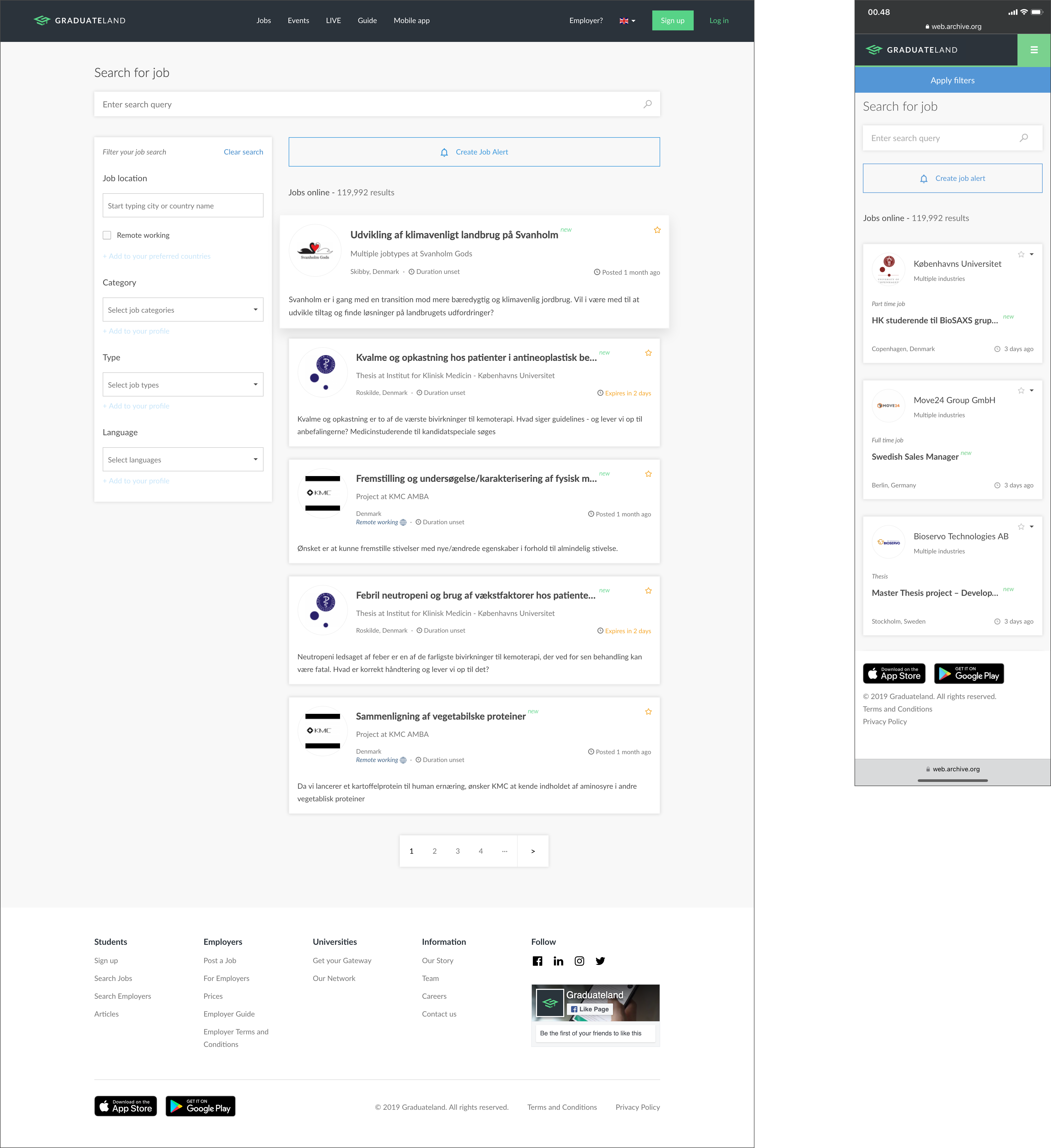
NPS feedback showed clear dissatisfaction with the job search experience, and key interface components had not been updated for several years. At the same time, more users were accessing the platform from mobile devices, where the experience was not fully optimised.
Further analysis revealed low engagement with filters and unclear interaction patterns. Many users were browsing to explore opportunities rather than searching for a specific role. This behaviour was common among students and was not well supported by the existing experience. The goal was to modernise the search experience, improve usability across devices, and support both targeted and exploratory job searches.
Design direction
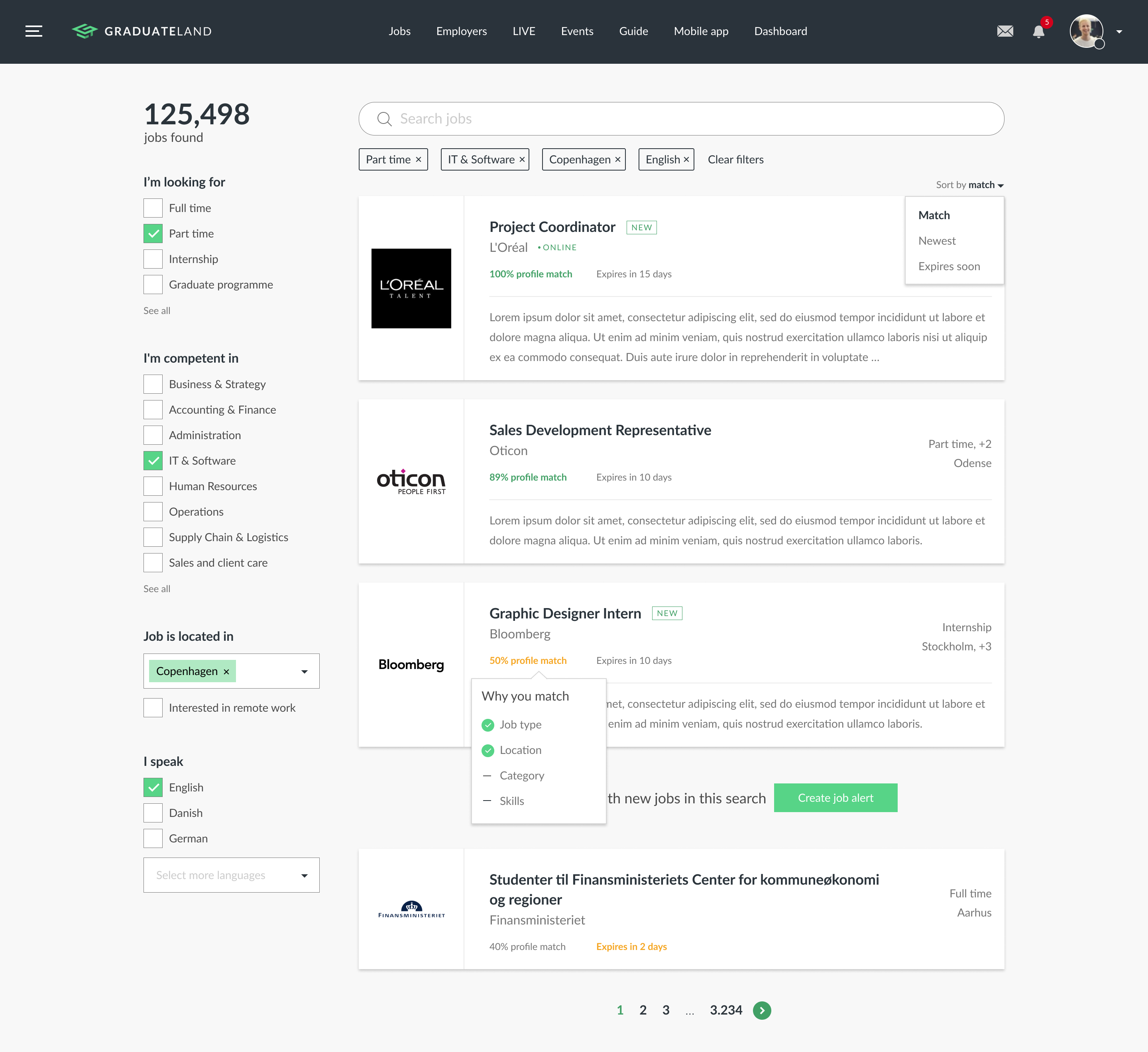
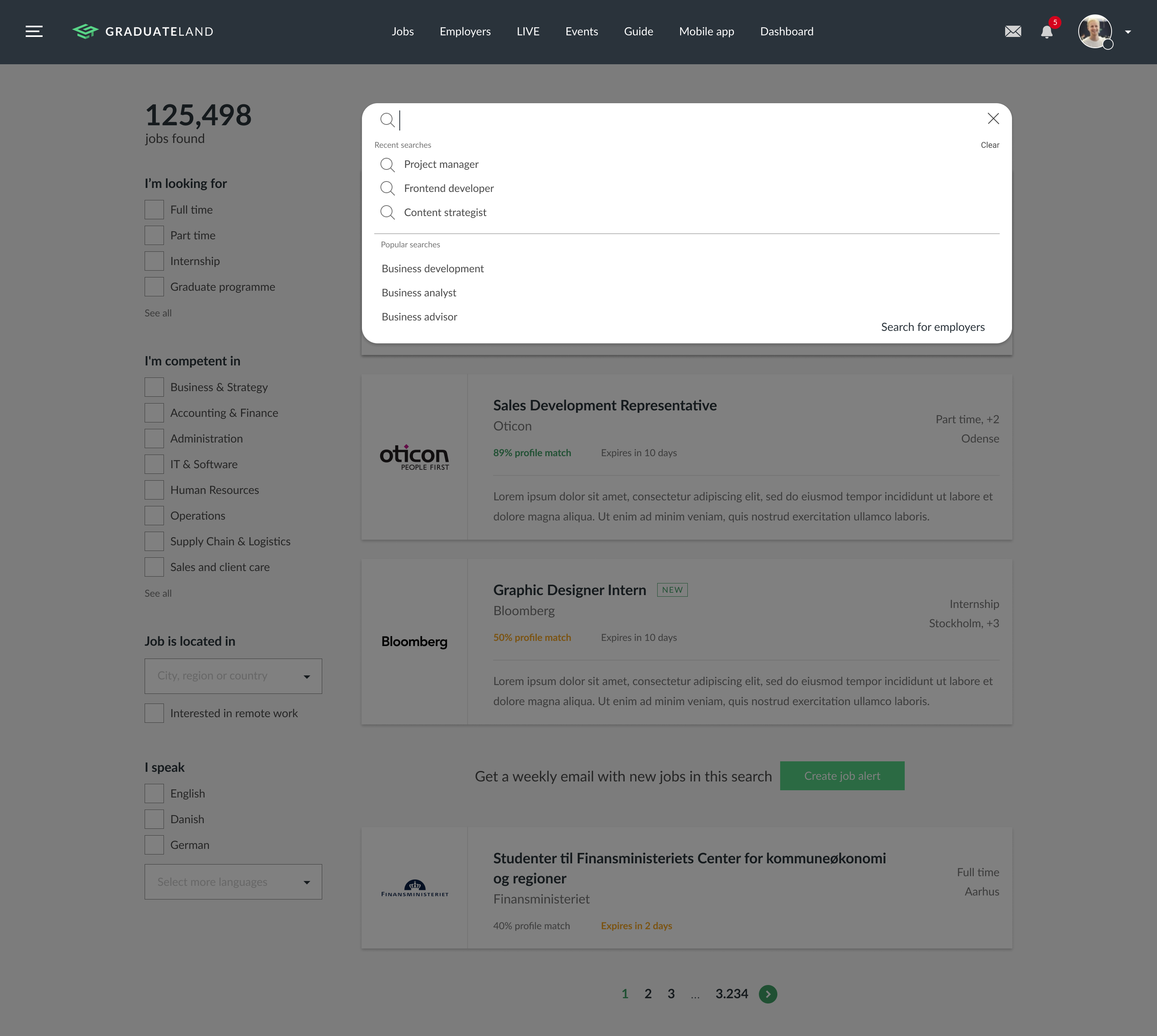
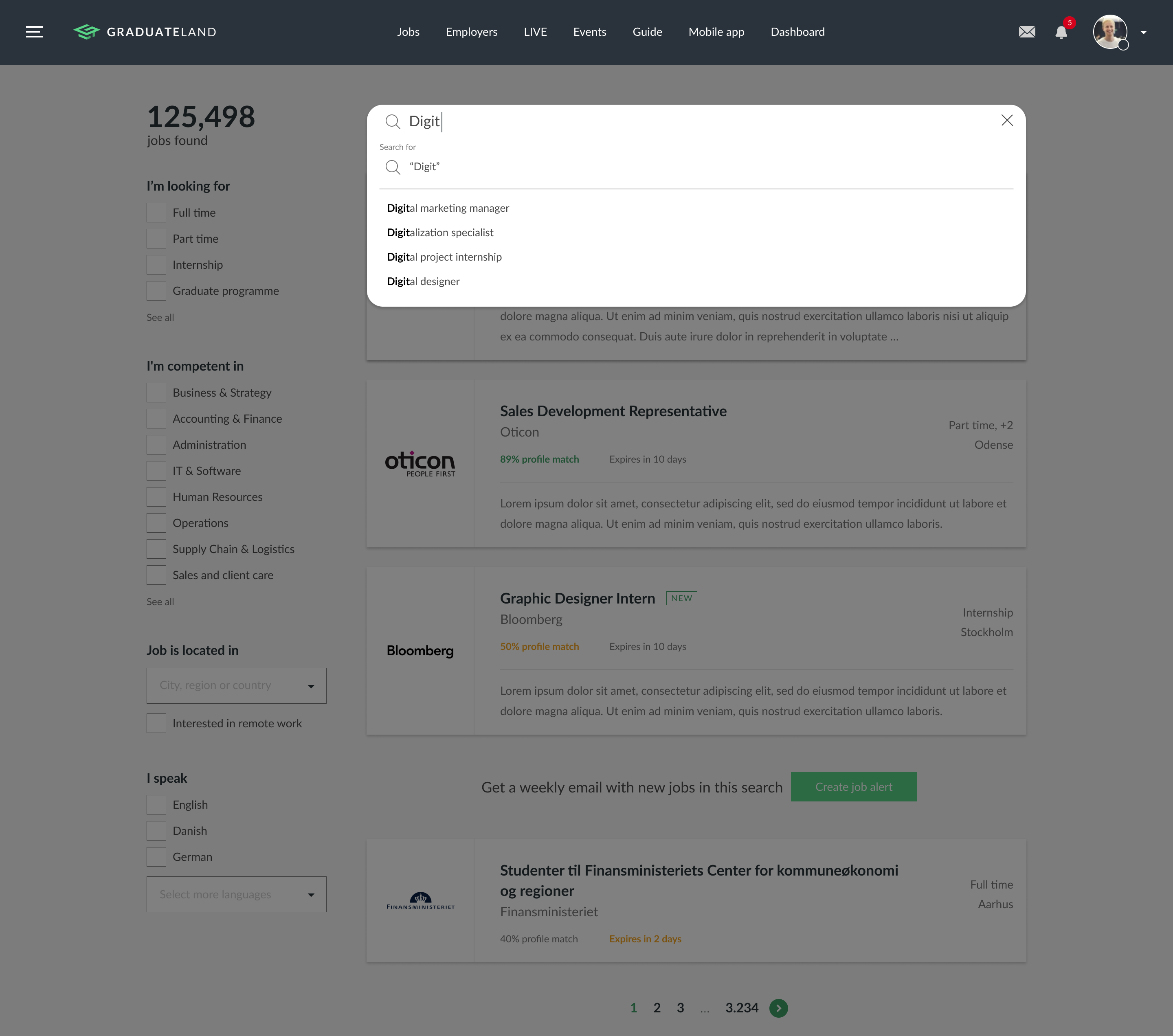
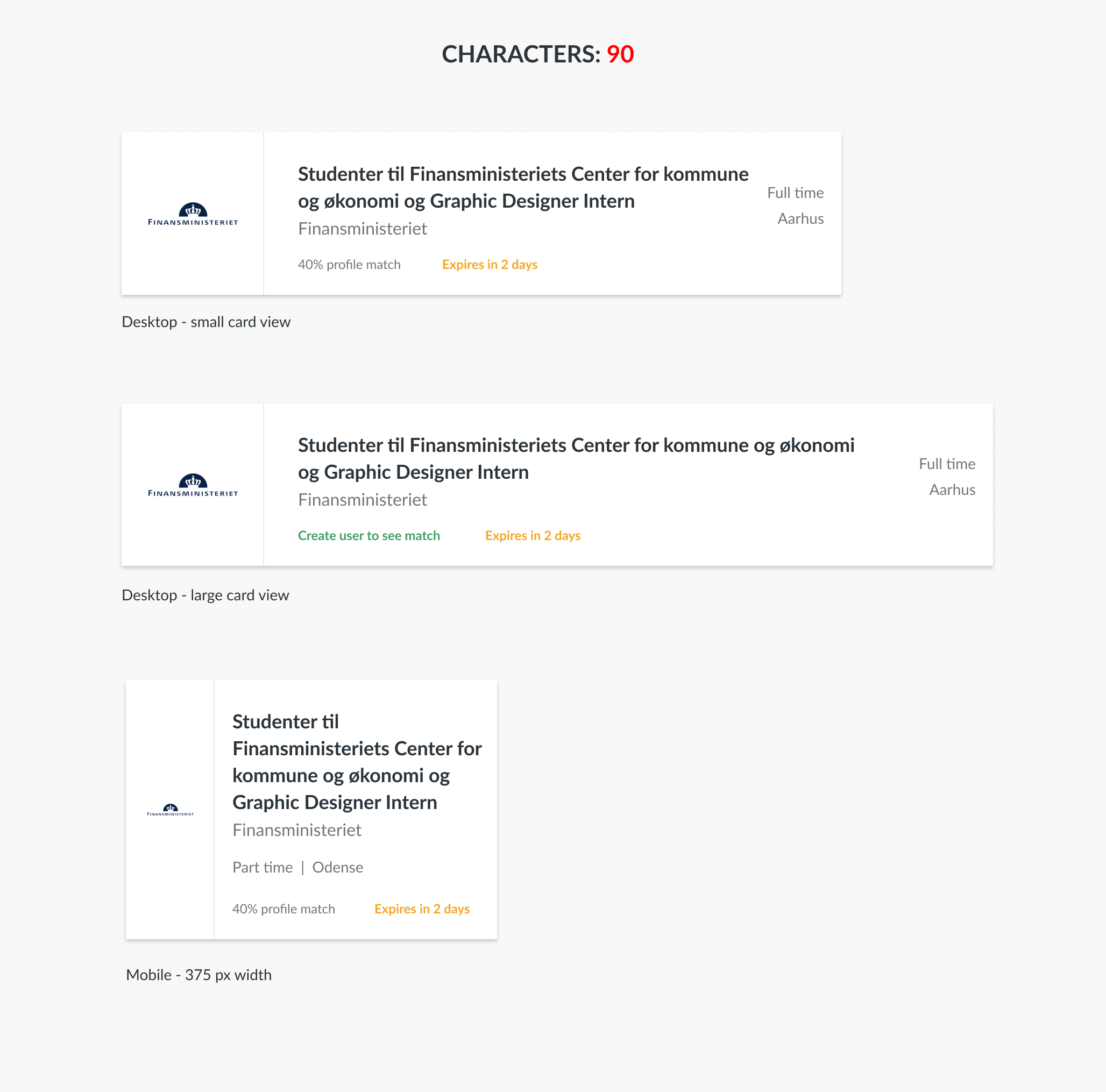
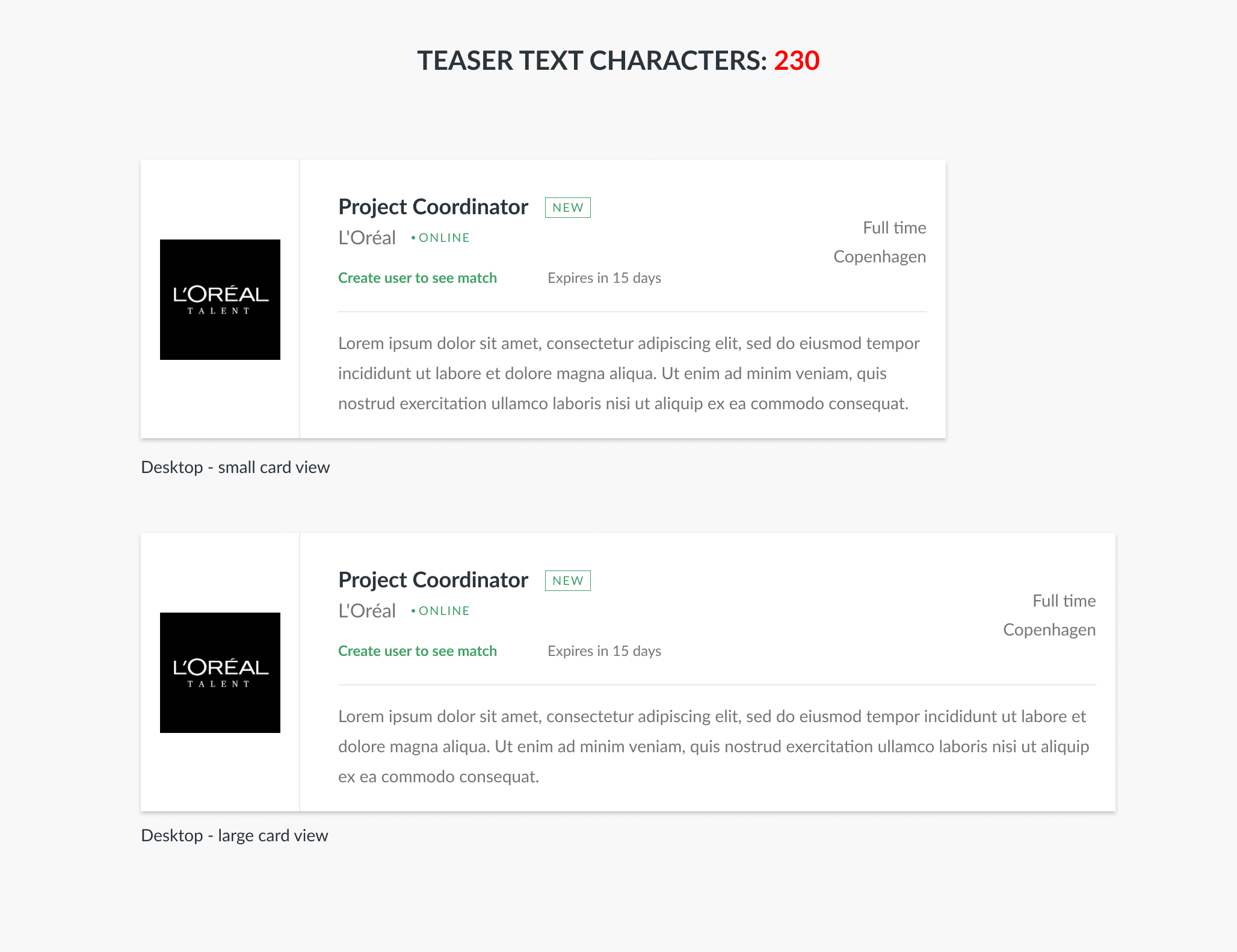
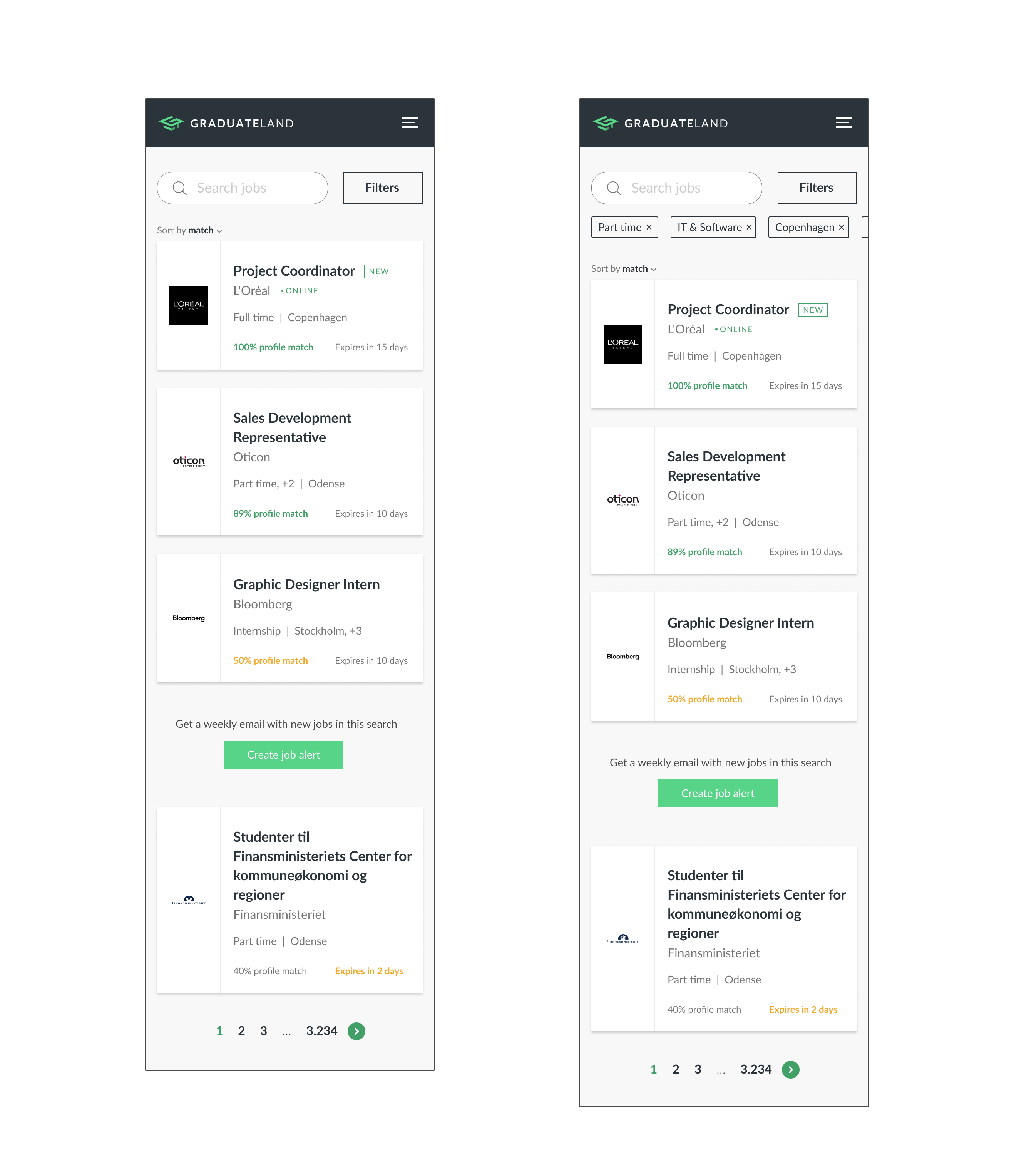
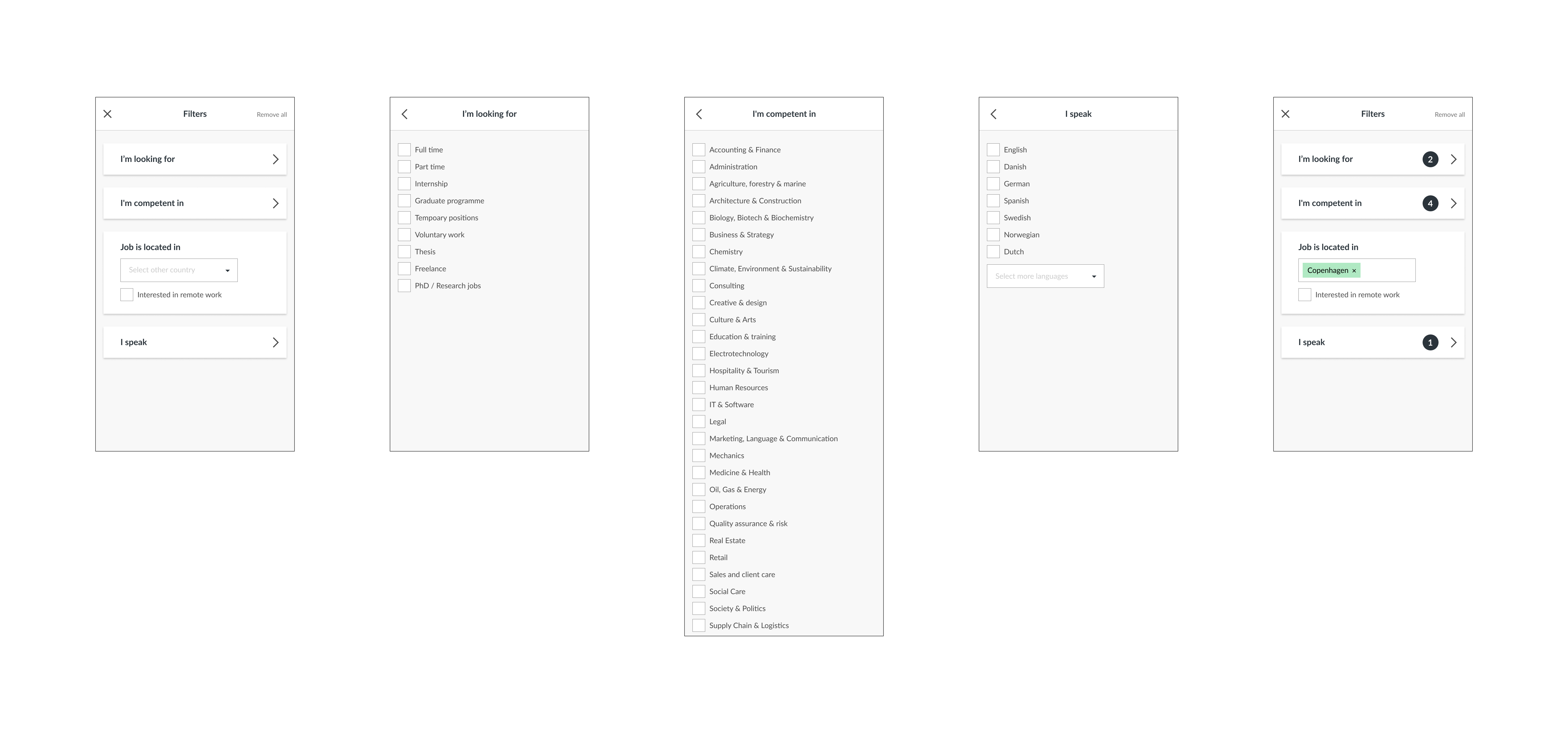
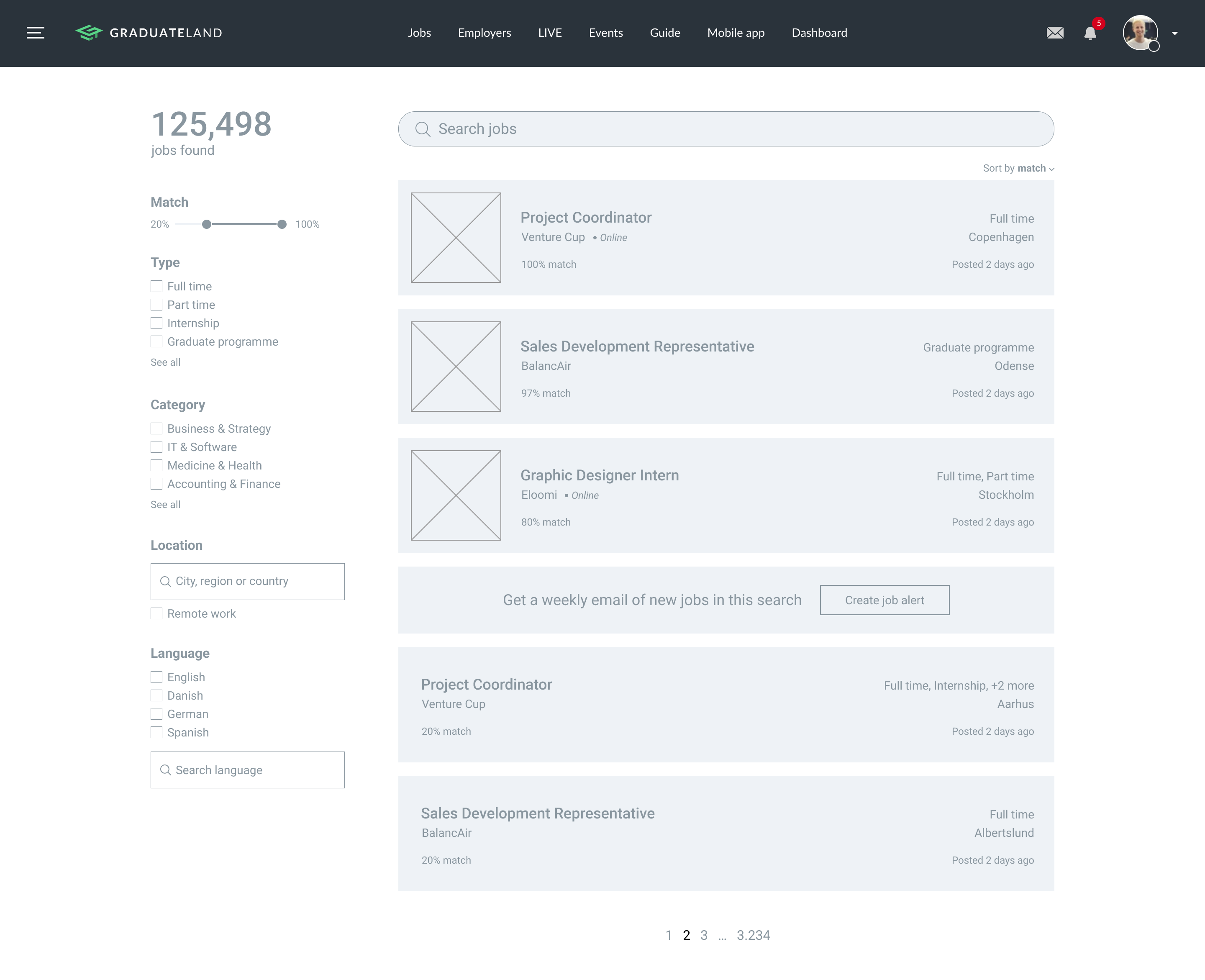
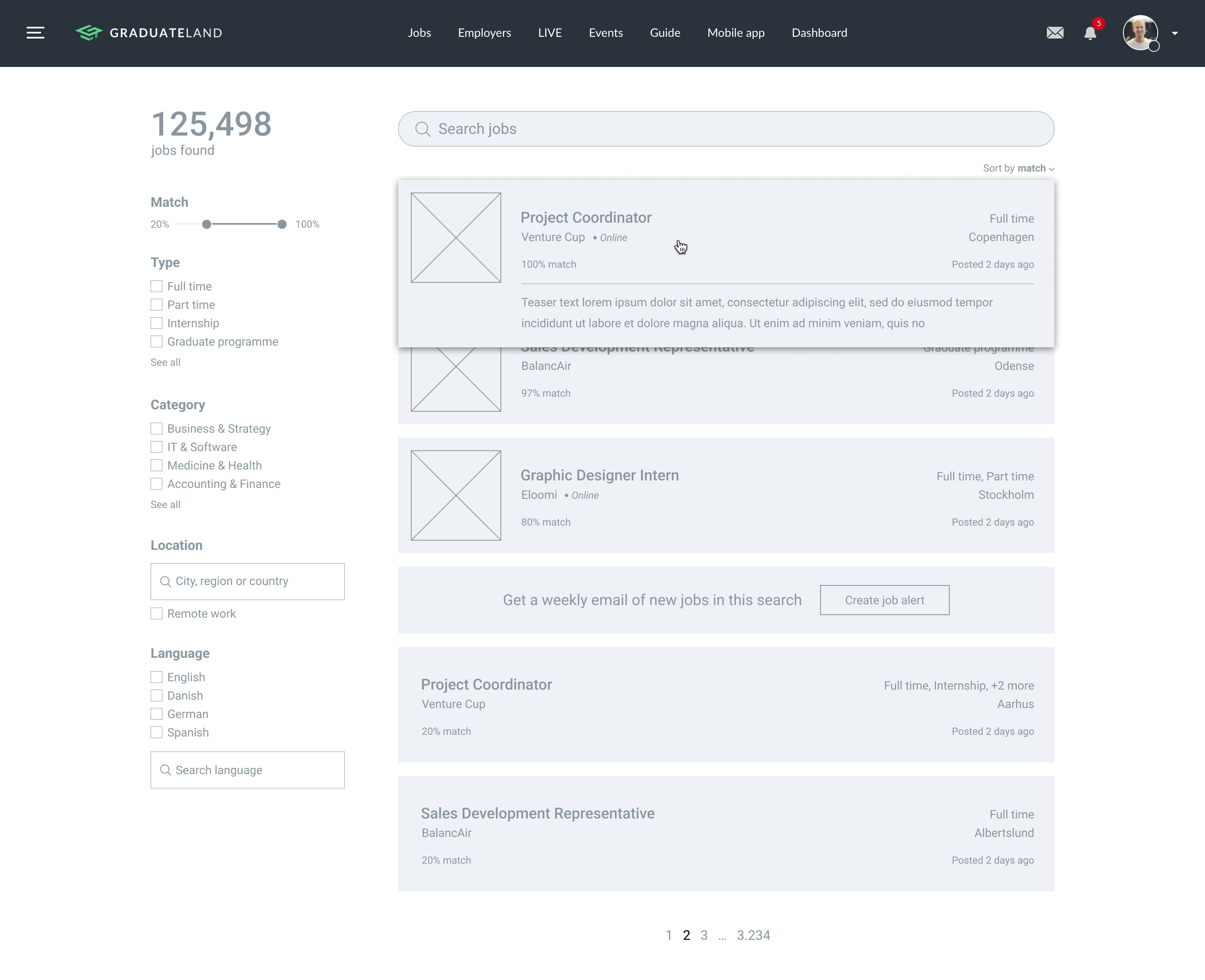
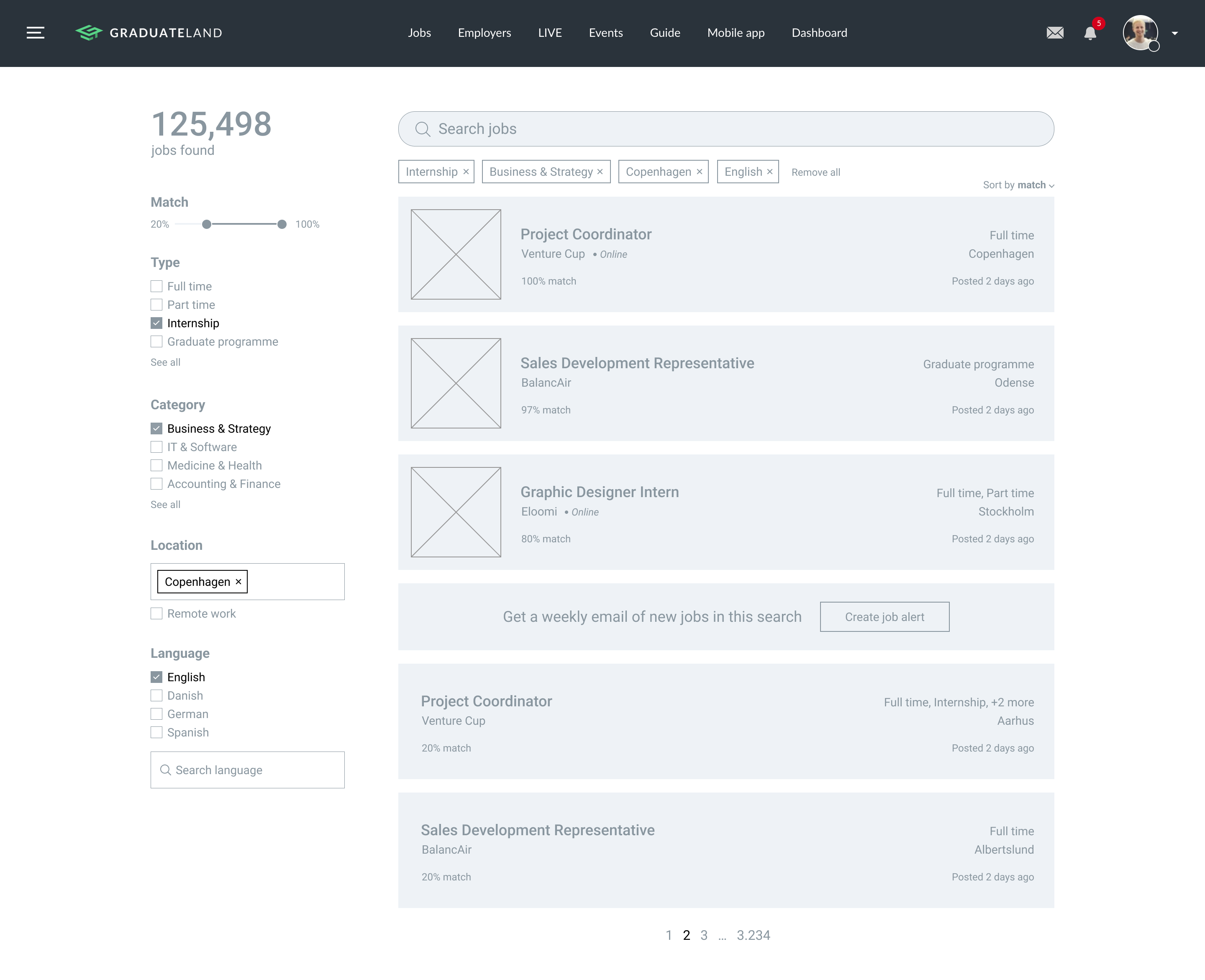
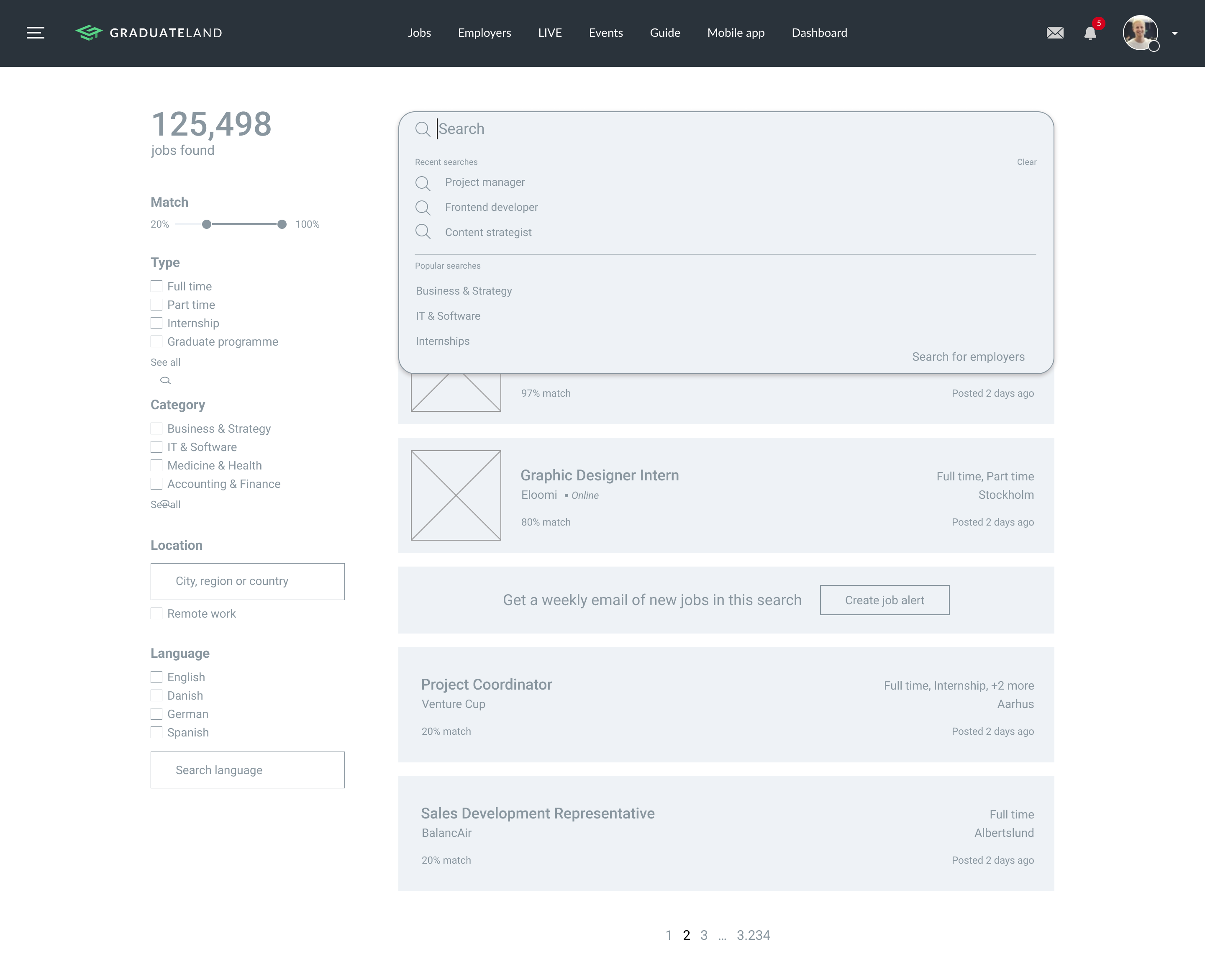
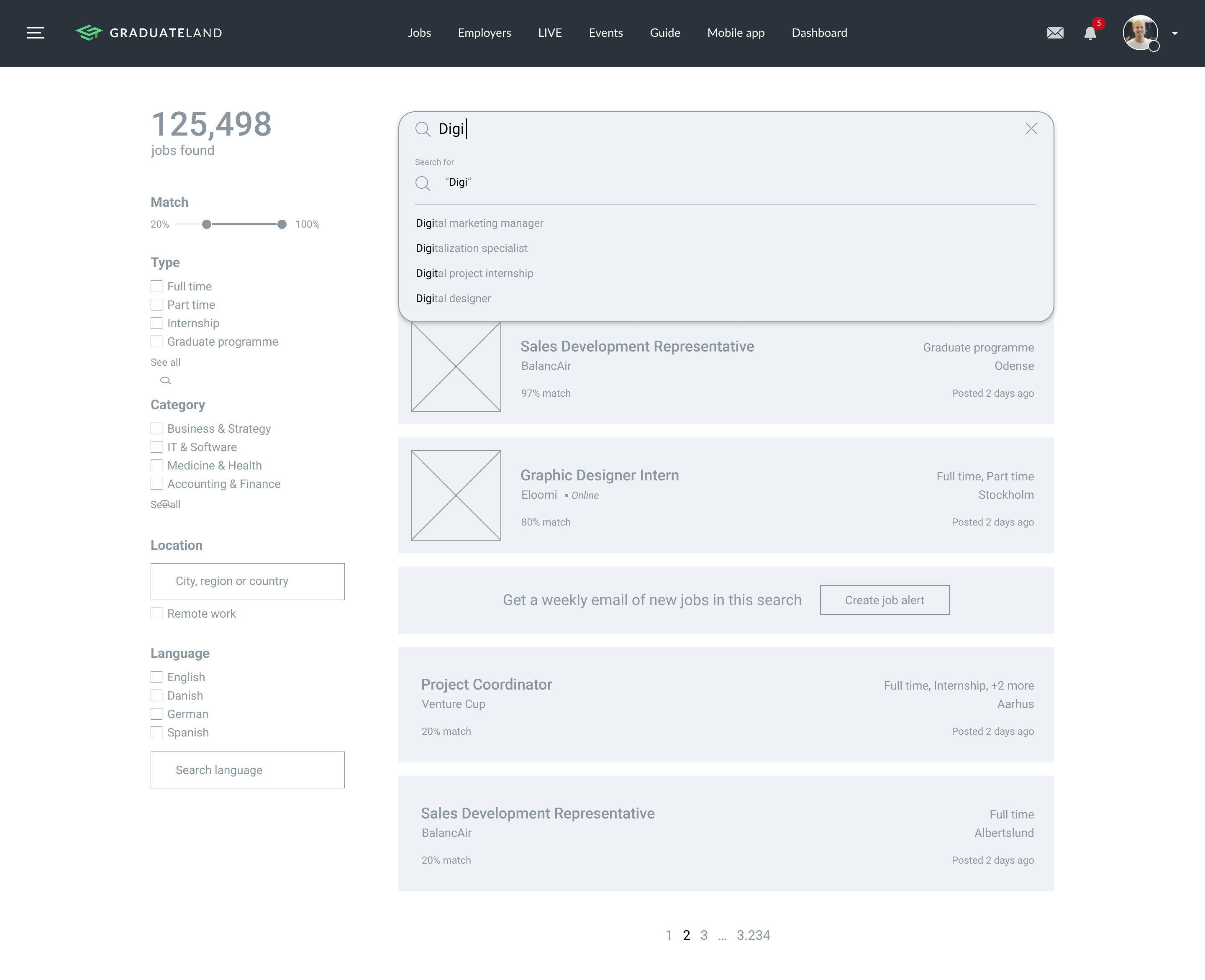
To define a more competitive job search experience, I reviewed patterns from other job platforms and modern search interfaces. This helped identify expectations around speed, clarity, and flexibility. The direction focused on supporting both targeted searches and exploratory browsing, while making filtering faster and results easier to scan. Features such as search suggestions, one-click filters, and structured job cards became central to the approach.
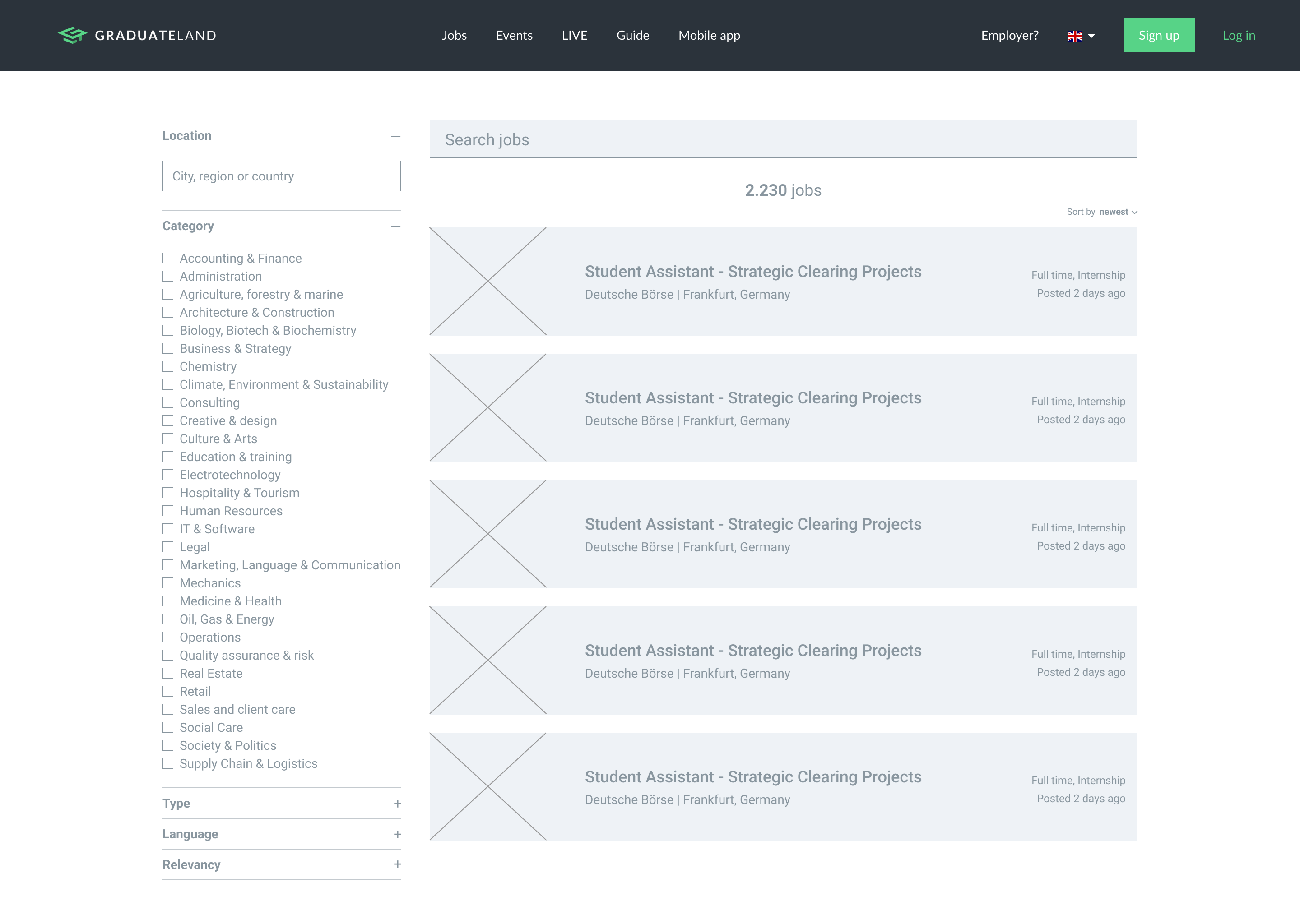
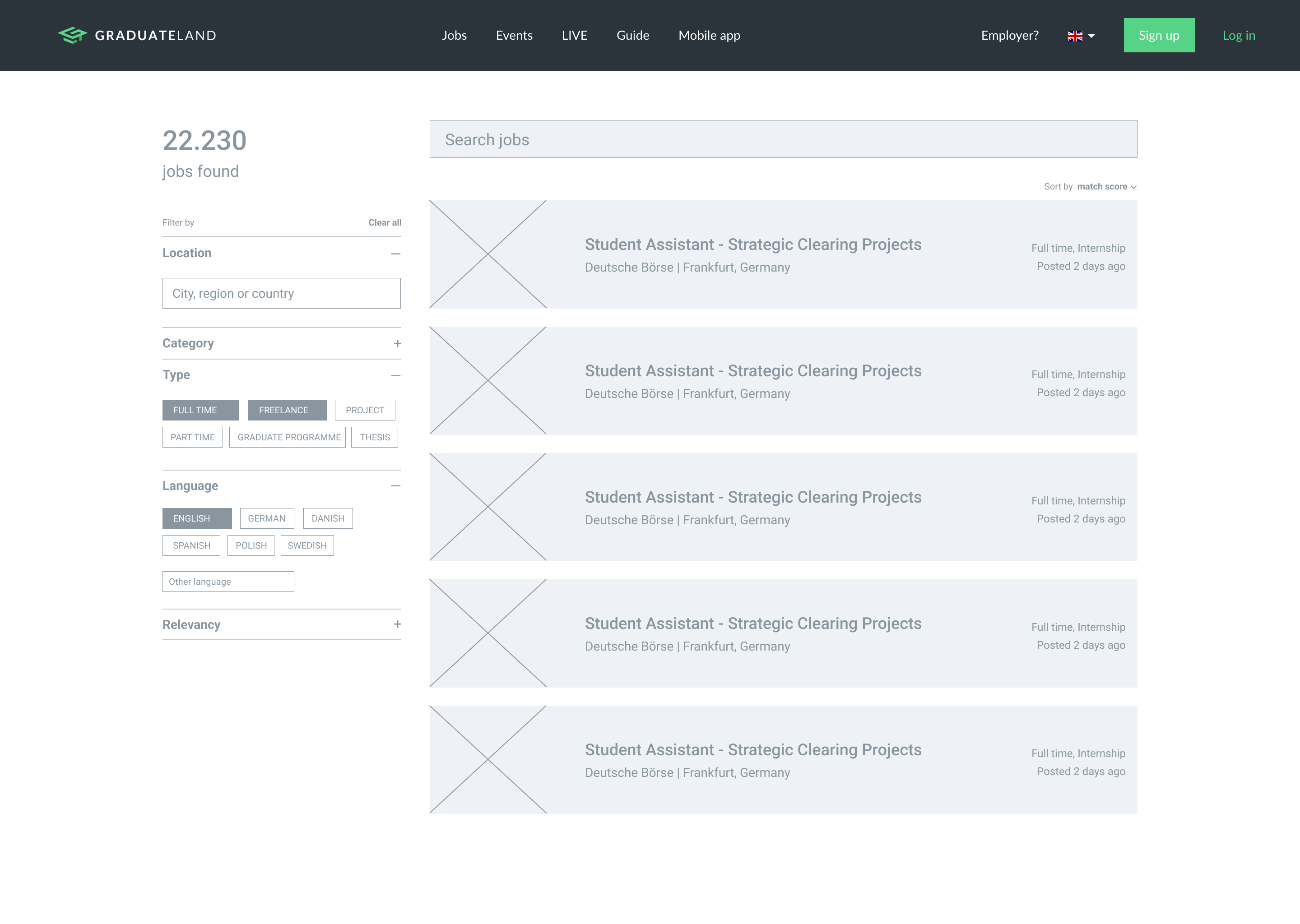
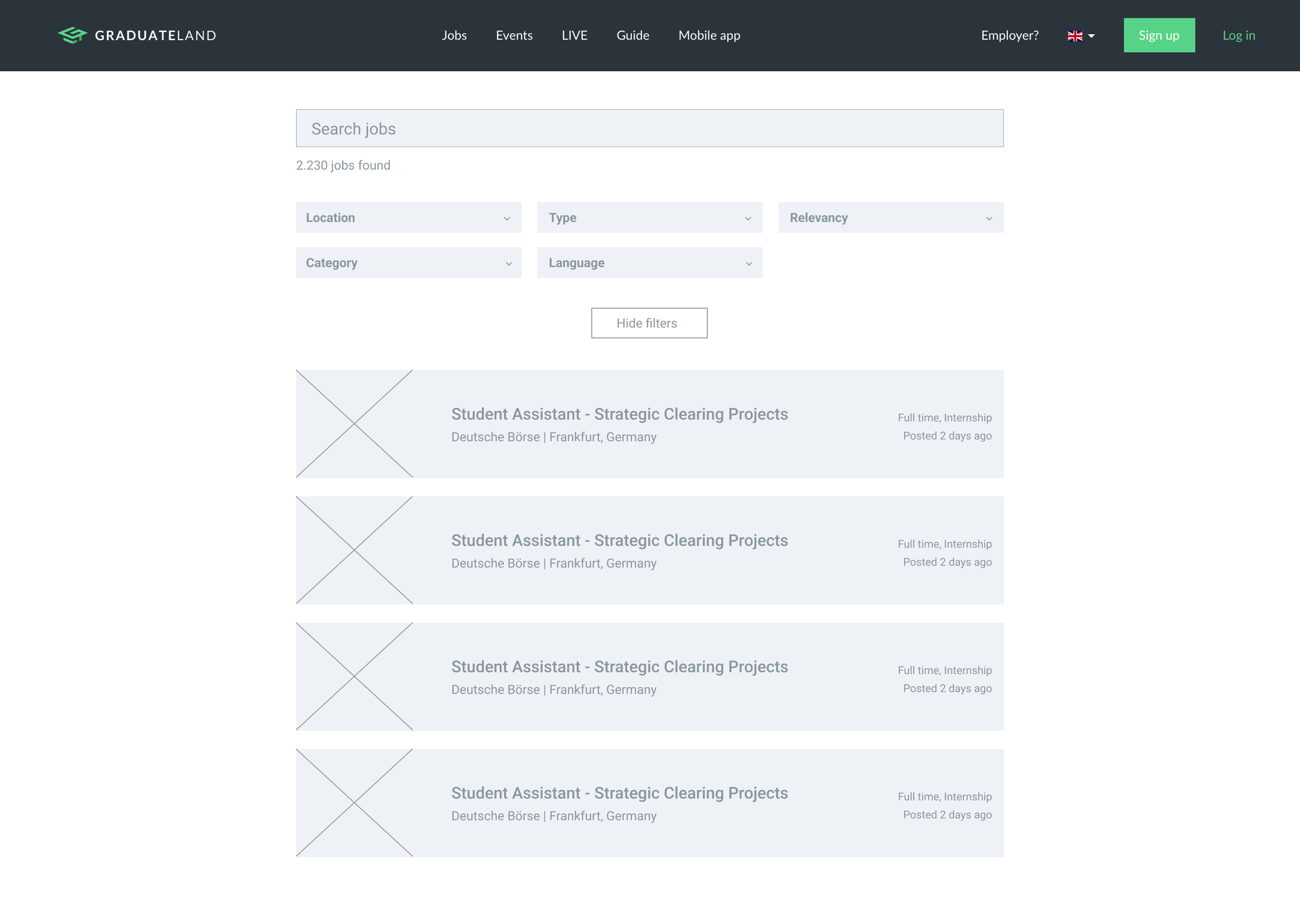
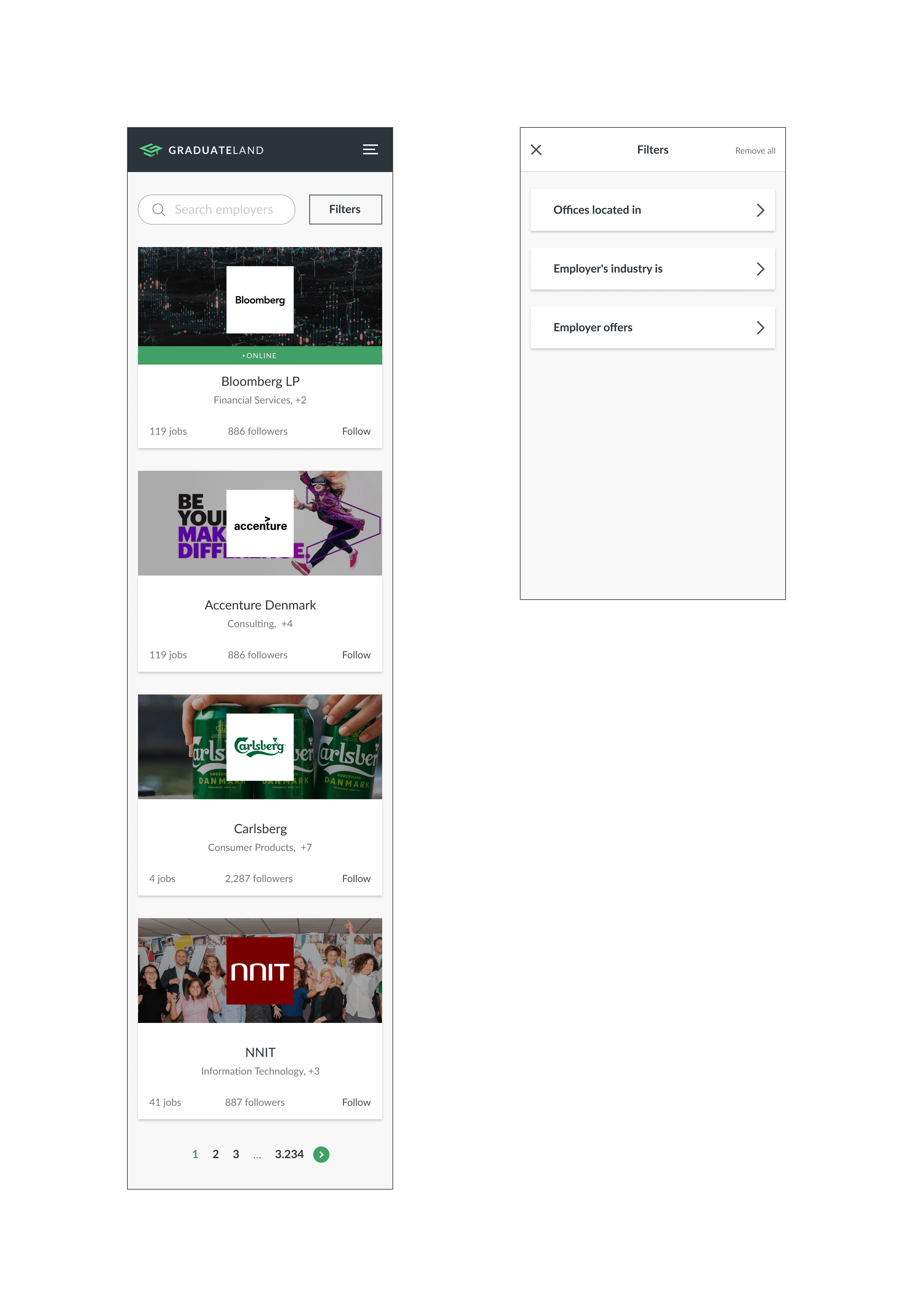
To translate this into a workable solution, I created and iterated on interactive wireframes for both desktop and mobile. These were used to align developers and stakeholders on functionality, interaction patterns, and scope. The process clarified technical requirements and ensured a shared understanding of the experience before implementation.
Design and validation
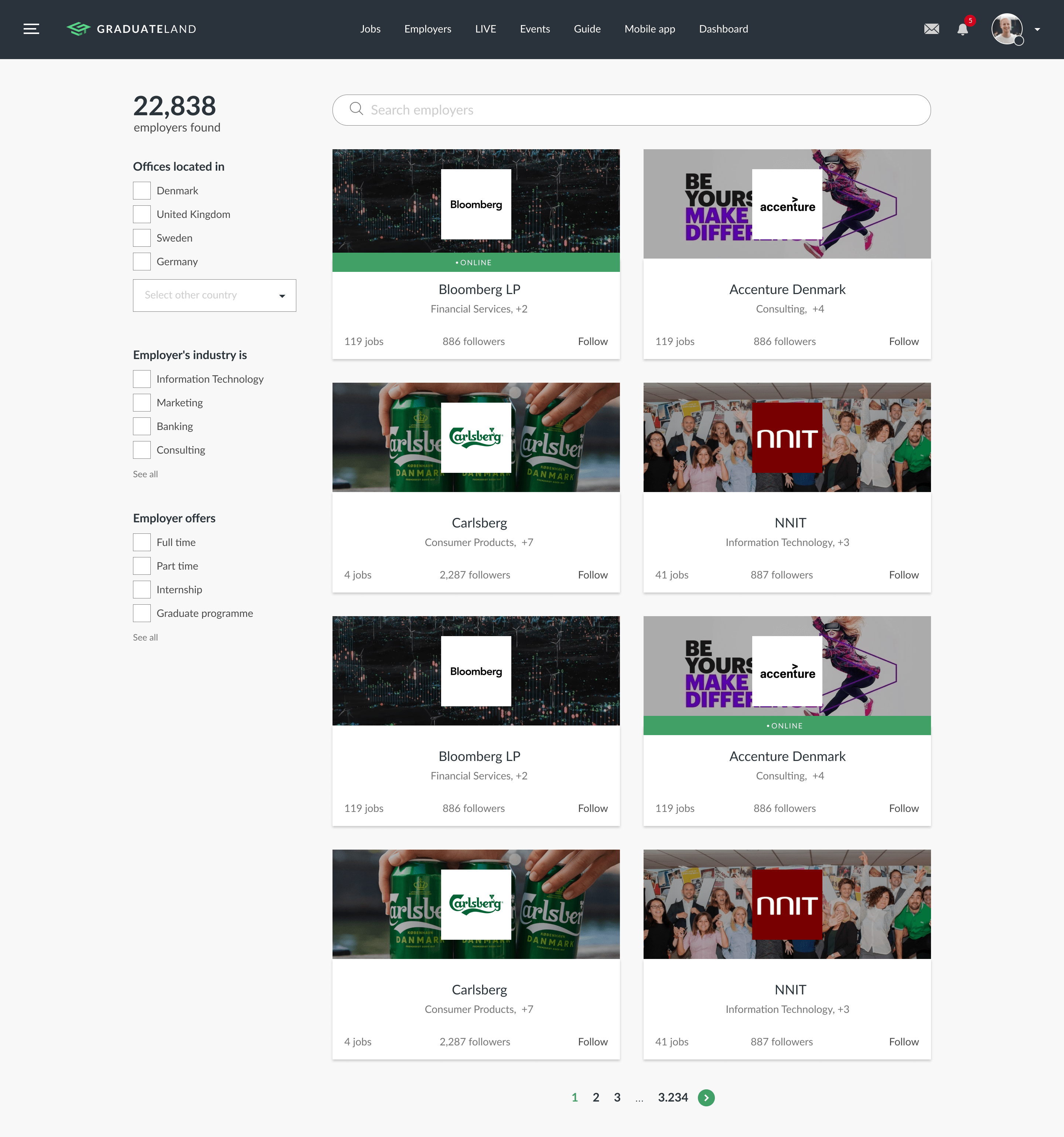
I challenged the existing design system due to its outdated look and feel and lack of support for a consistent user experience across different viewports. I created new responsive UI components while ensuring alignment with existing components across the platform. As part of the iterative design process, I conducted a series of moderated user tests within my professional network. These sessions provided rapid feedback on usability issues and general impressions of the new job search experience, which was presented through interactive prototypes.
I then conducted remote unmoderated testing with a panel of international participants to understand how the design and new features would be received across different contexts. Based on this feedback, I refined components and interactions before handing over the finalised design to developers. After launch, we observed an increase in job views per user and a rise in NPS, indicating improved engagement and overall experience.