
Danish Maritime Authority website
My first big client project with developer collaboration
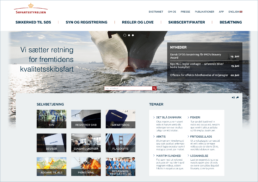
Overview
During my studies, I worked as a Junior Consultant at Innofactor, where I began transitioning into UX and UI design. I contributed to winning a project to design a new public website for the Danish Maritime Authority in 2014.
As the sole designer on the project, I was responsible for the website design and collaborated closely with developers and client stakeholders throughout the process. The project provided early hands-on experience in responsive web design and working within technical constraints. It also strengthened my ability to align design decisions with client expectations and business requirements. The website was launched in 2015 and remained live until 2020.
My roleLead UX and UI design for the website.ClientDanish Maritime AuthorityPlatformWeb platform (SharePoint 2013)FocusPublic sector · Responsive design · UI design · UX design · Stakeholder collaborationOutcomeDelivered a responsive public website within technical constraints and aligned with client requirements.Year2014 - 2015Linkhttp://www.soefartsstyrelsen.dk
Design brief
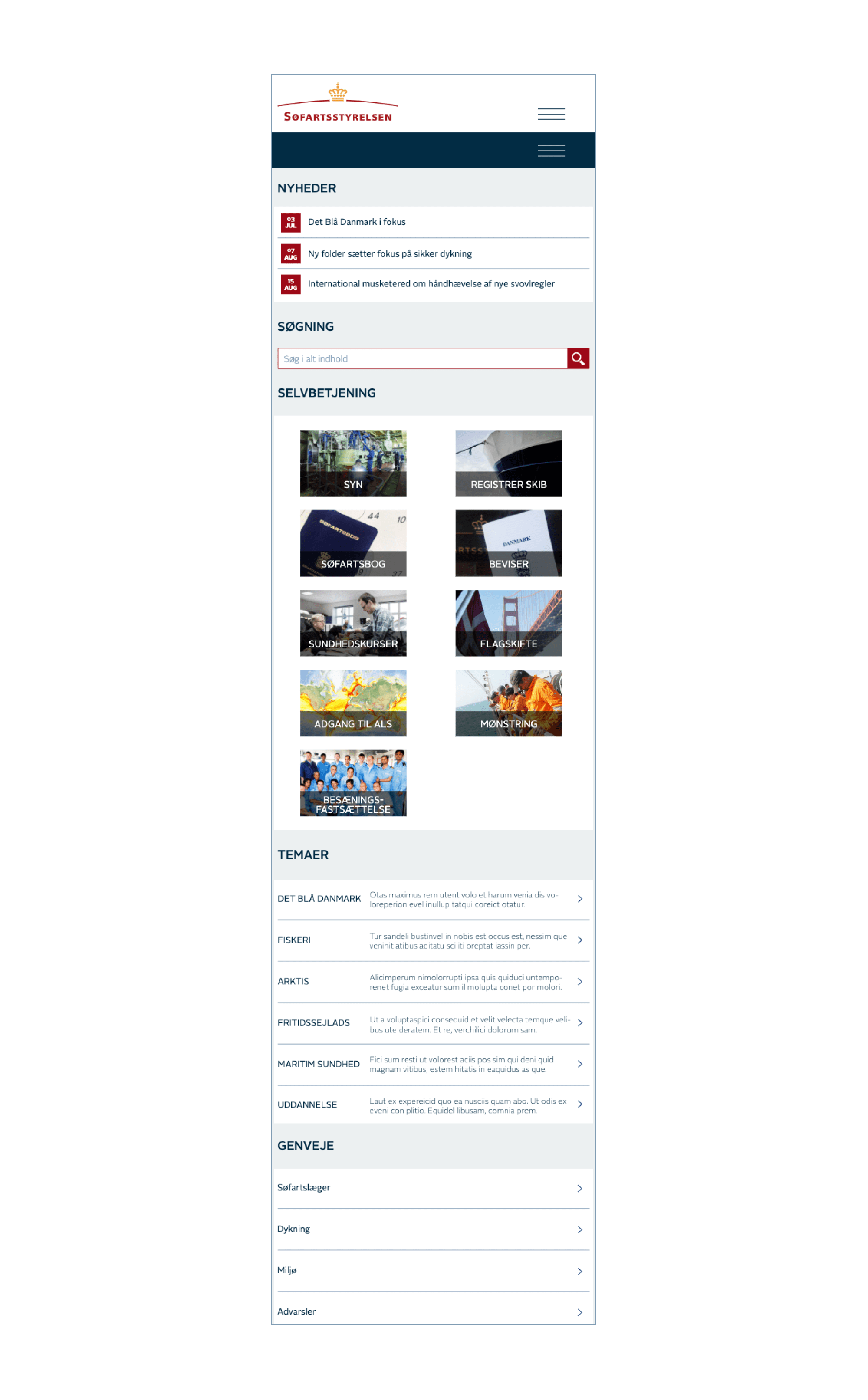
Innofactor had numerous technical experts skilled in crafting internal SharePoint intranets for clients. However, they hadn’t ventured into developing external responsive websites. I was assigned the task of creating website mockups for the tender application, a challenge given a tight deadline of just two days. My goal was to ensure that the website design not only aligned with the technical constraints of SharePoint 2013 but also met contemporary website standards at that time, including making all elements responsive.
Mockups
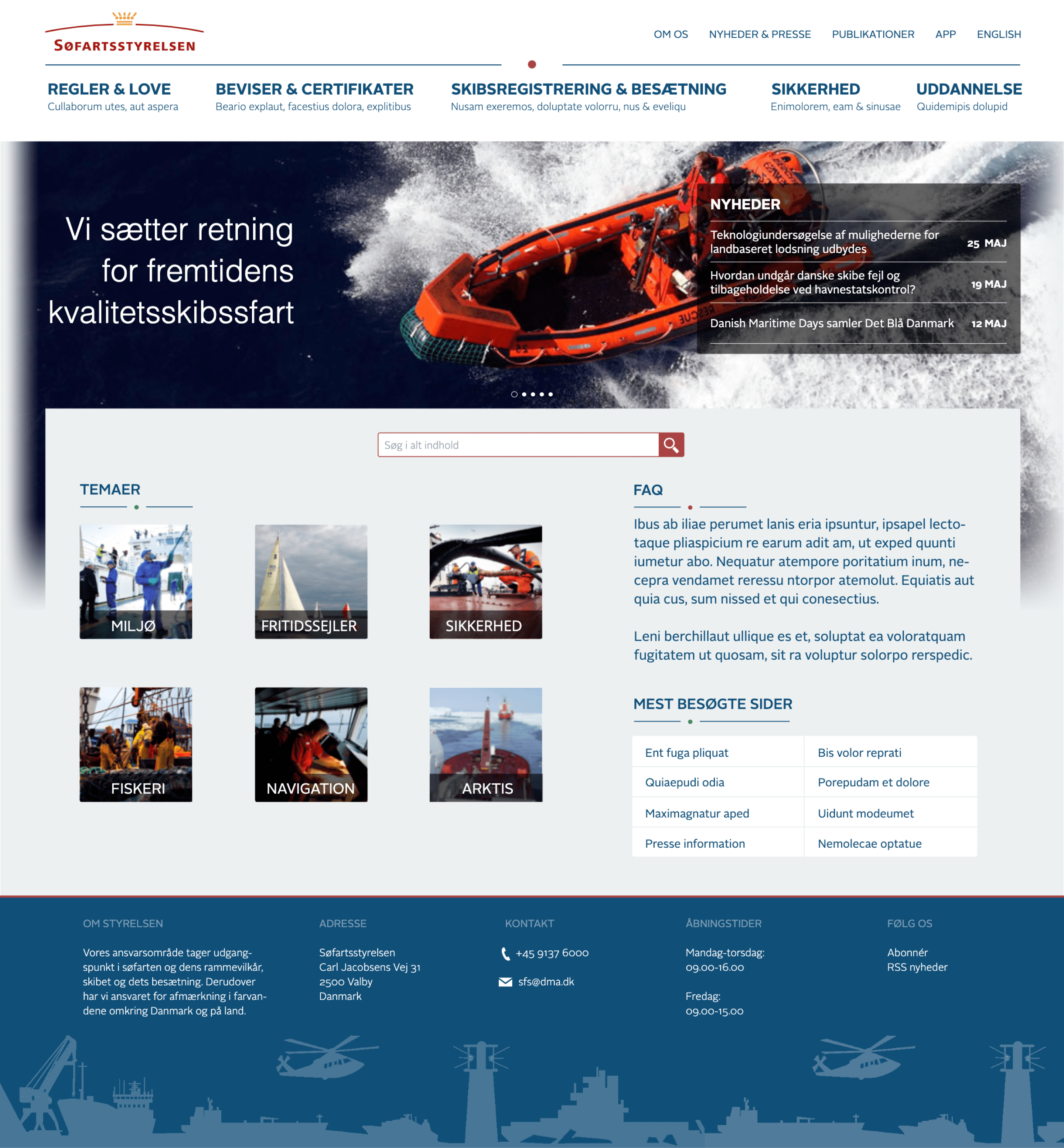
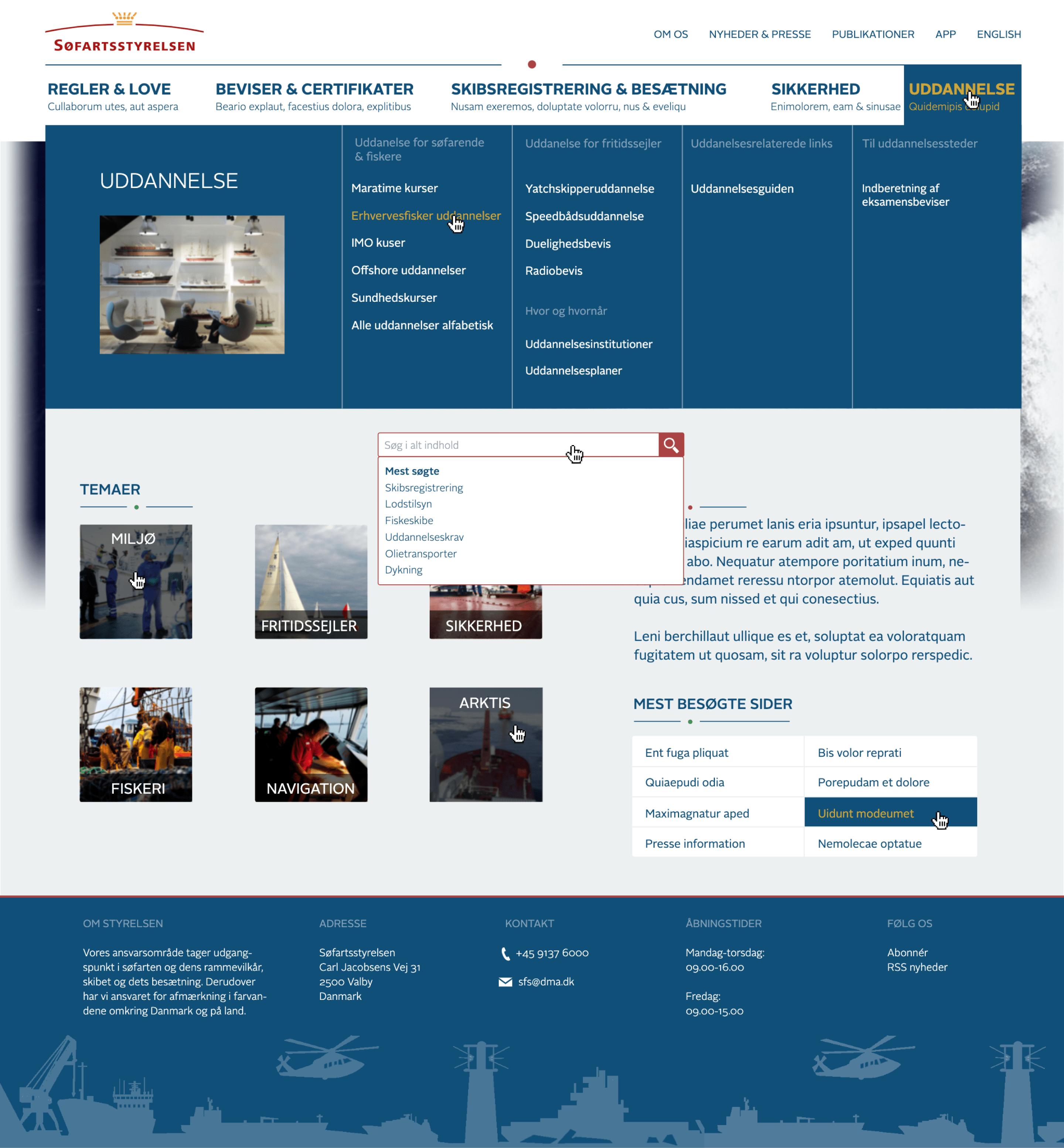
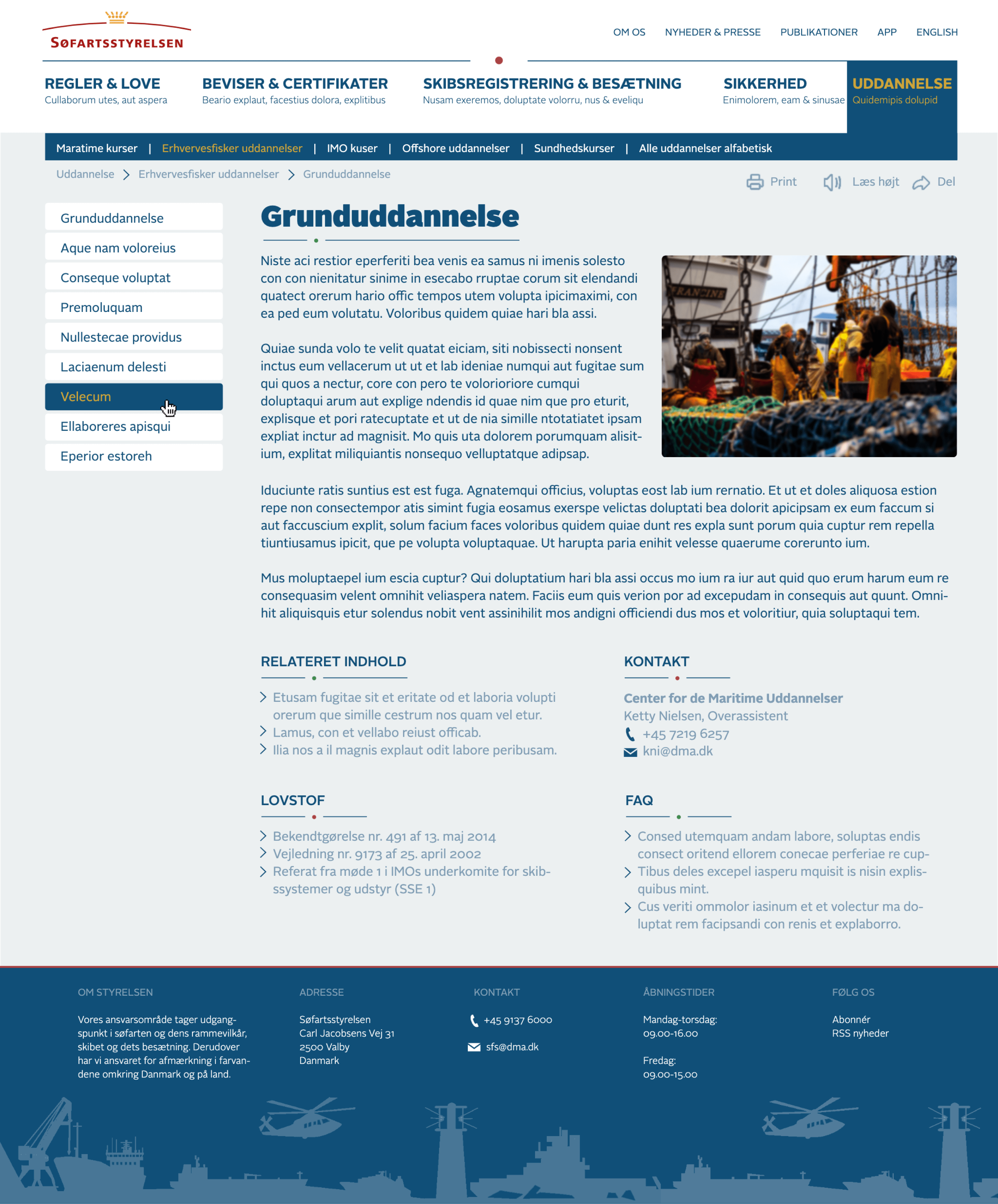
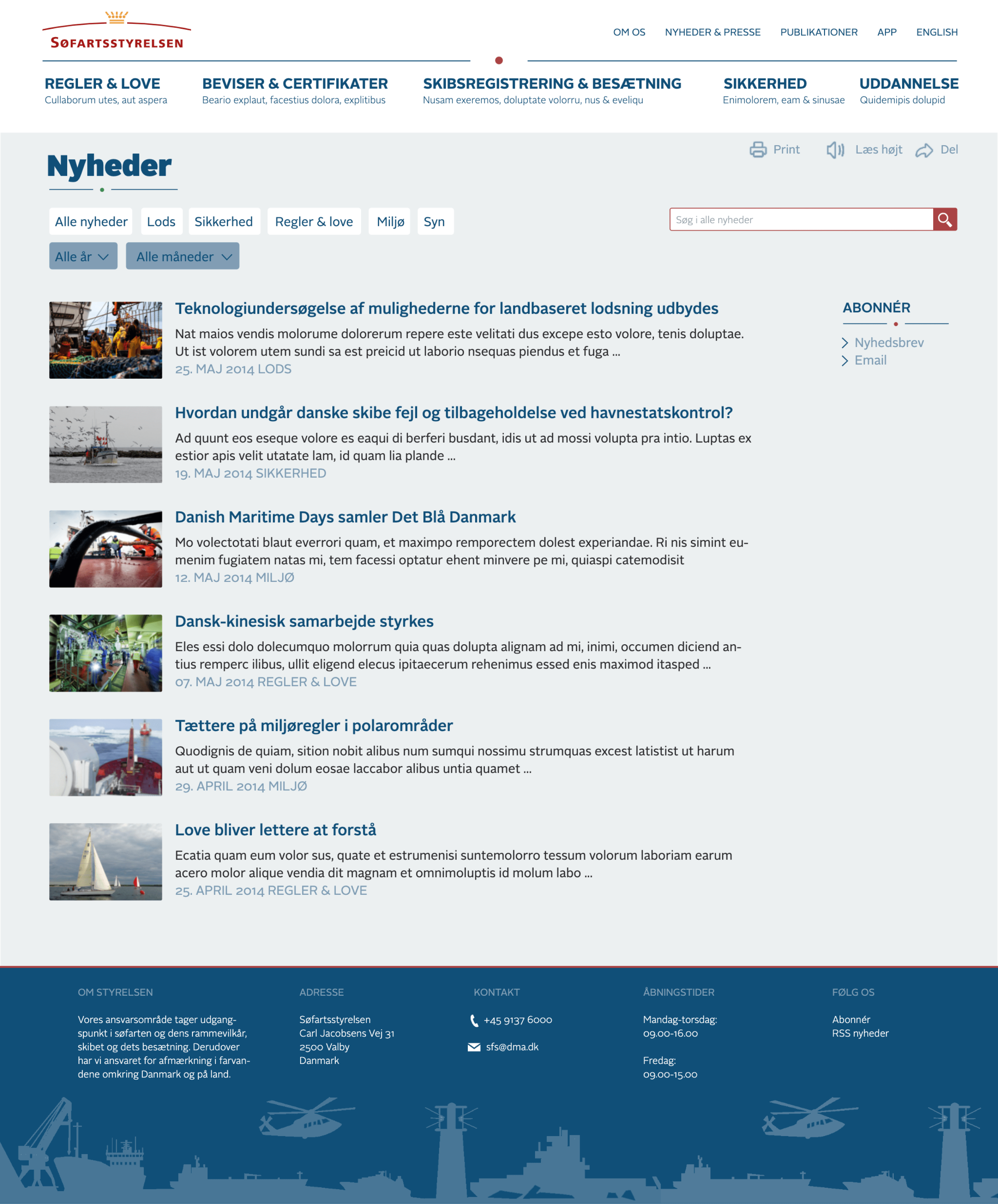
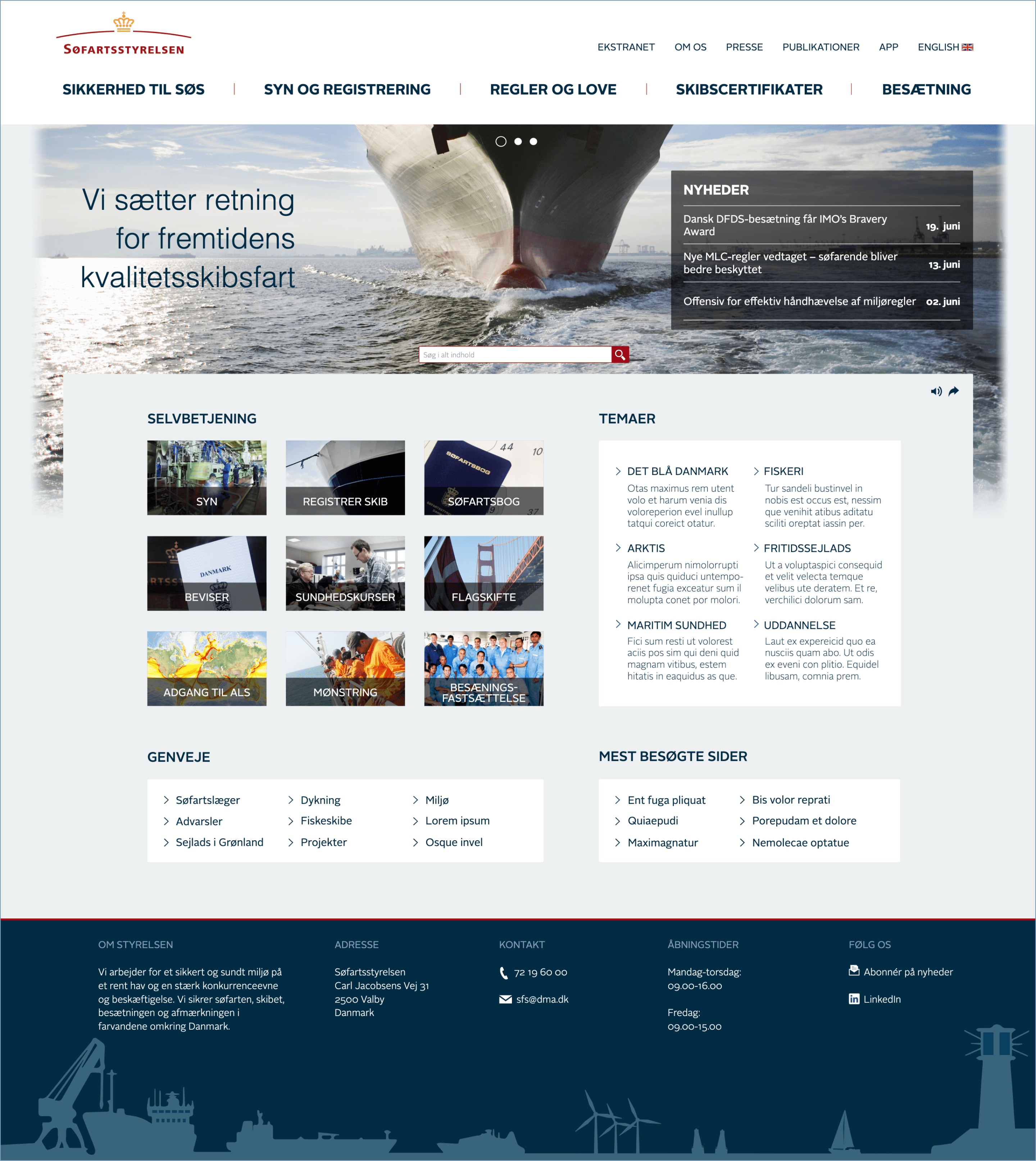
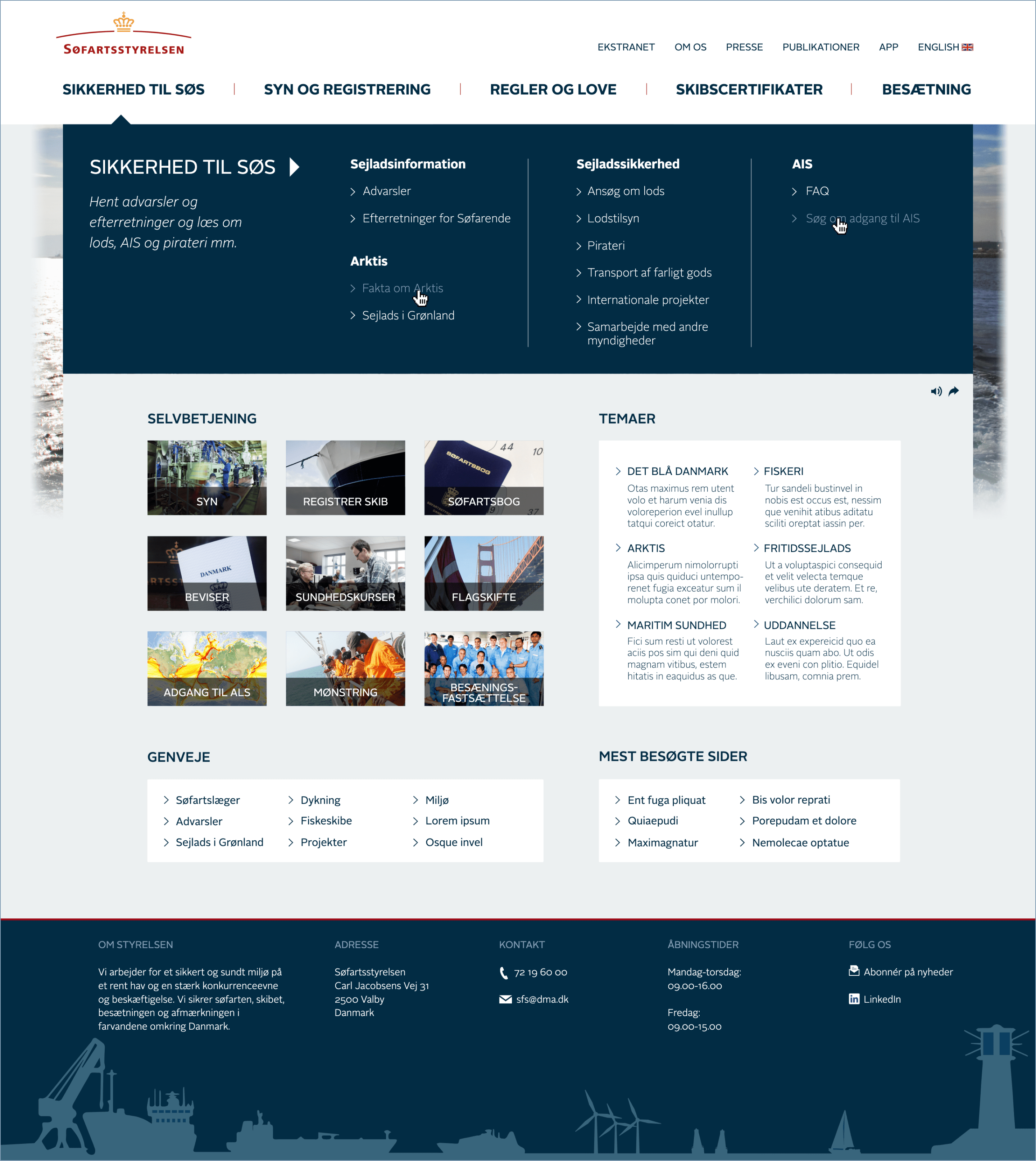
Over the course of two intense days, I engaged in design sessions, collaborating closely with Innofactor business managers and developers. Together, we crafted designs for various page types. My primary focus was on aligning the look and feel with the client’s identity, embodying a formal public authority.
Simultaneously, I recognized the website’s important role as an access point for diverse user groups seeking information about maritime regulations and news. Consequently, I prioritized making the website as accessible as possible, ensuring seamless navigation and optimal scannability in line with industry best practices.
Process
After Innofactor secured the project, a four-month design process began. During this period, I collaborated closely with client stakeholders and Innofactor developers. The challenge was to align client expectations and preferences with the actual technical capabilities of SharePoint. Although SharePoint wasn’t ideal for external (and responsive) websites, it excelled in managing vast amounts of information accessible to the public. Regrettably, user testing was not within the project scope. Nevertheless, I applied general design principles and focused on enhancing my understanding of effective vendor-client collaboration.
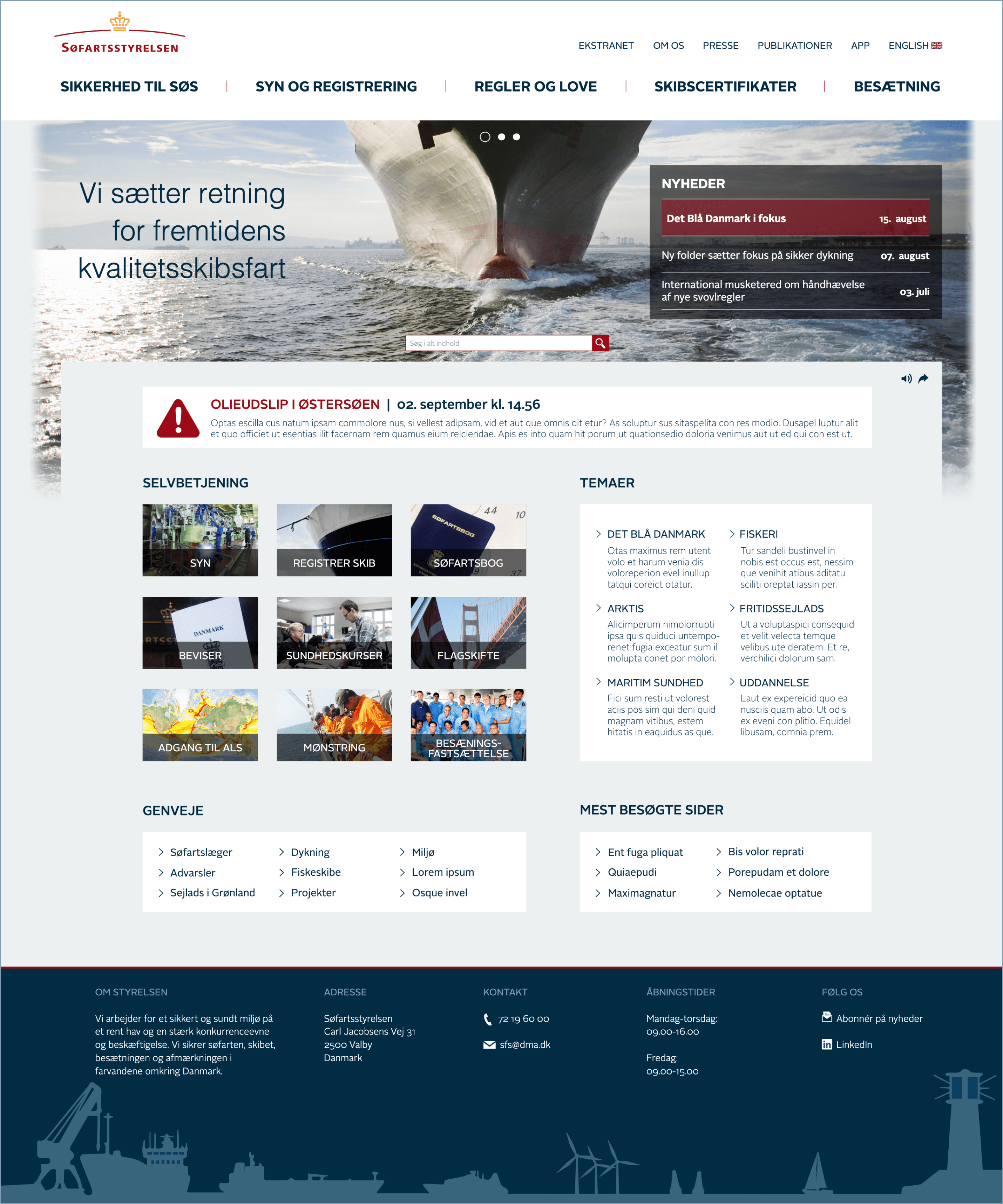
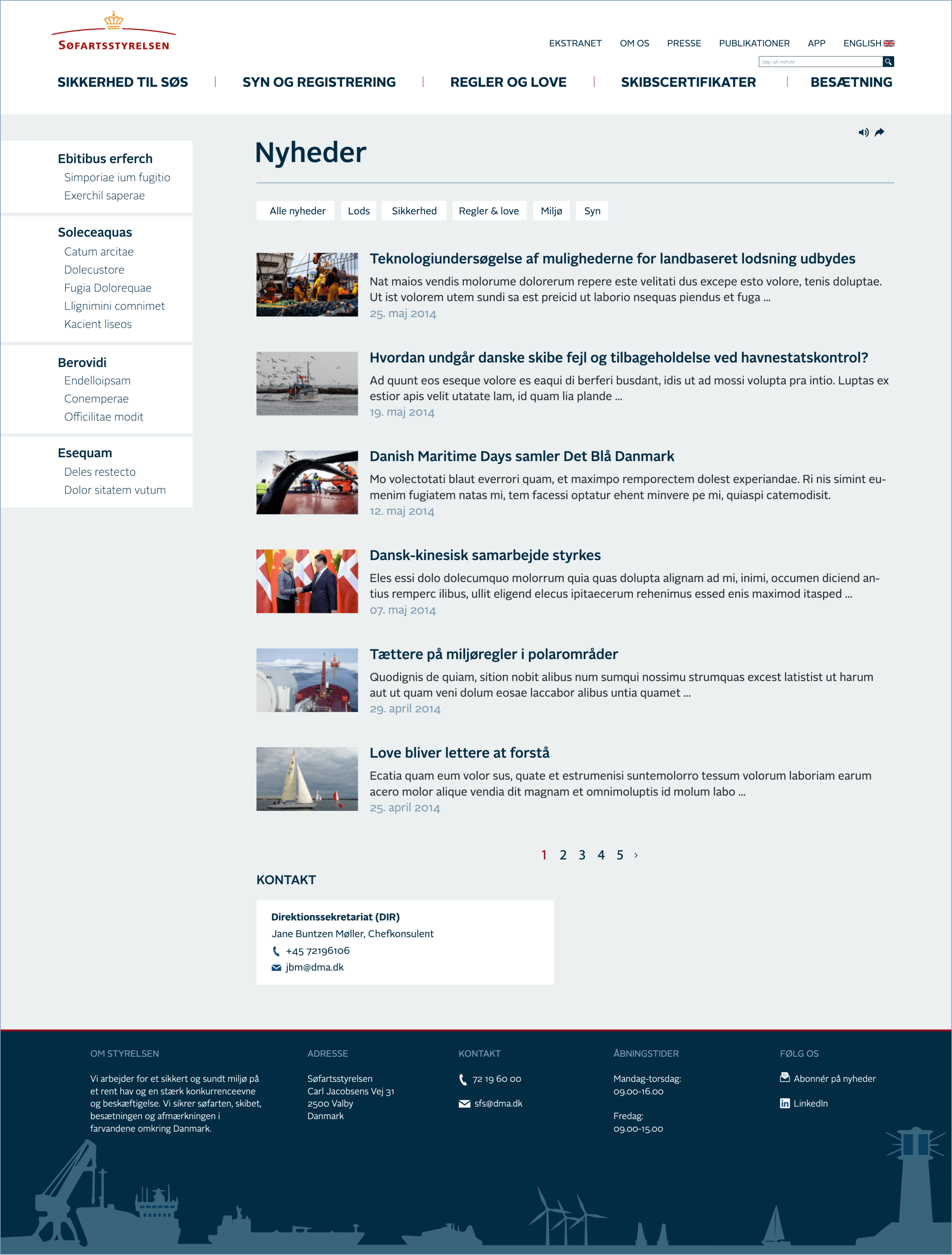
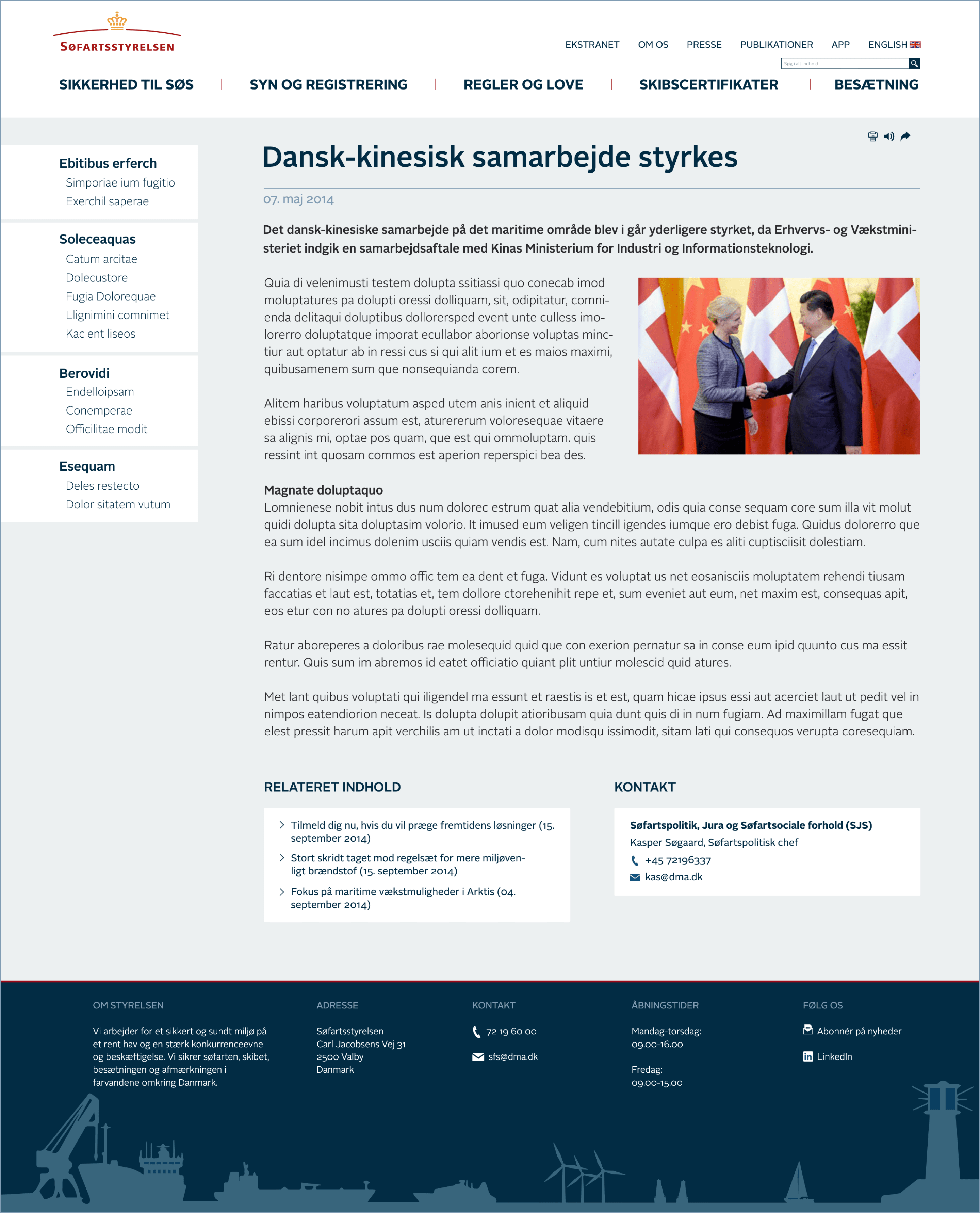
Old school handover
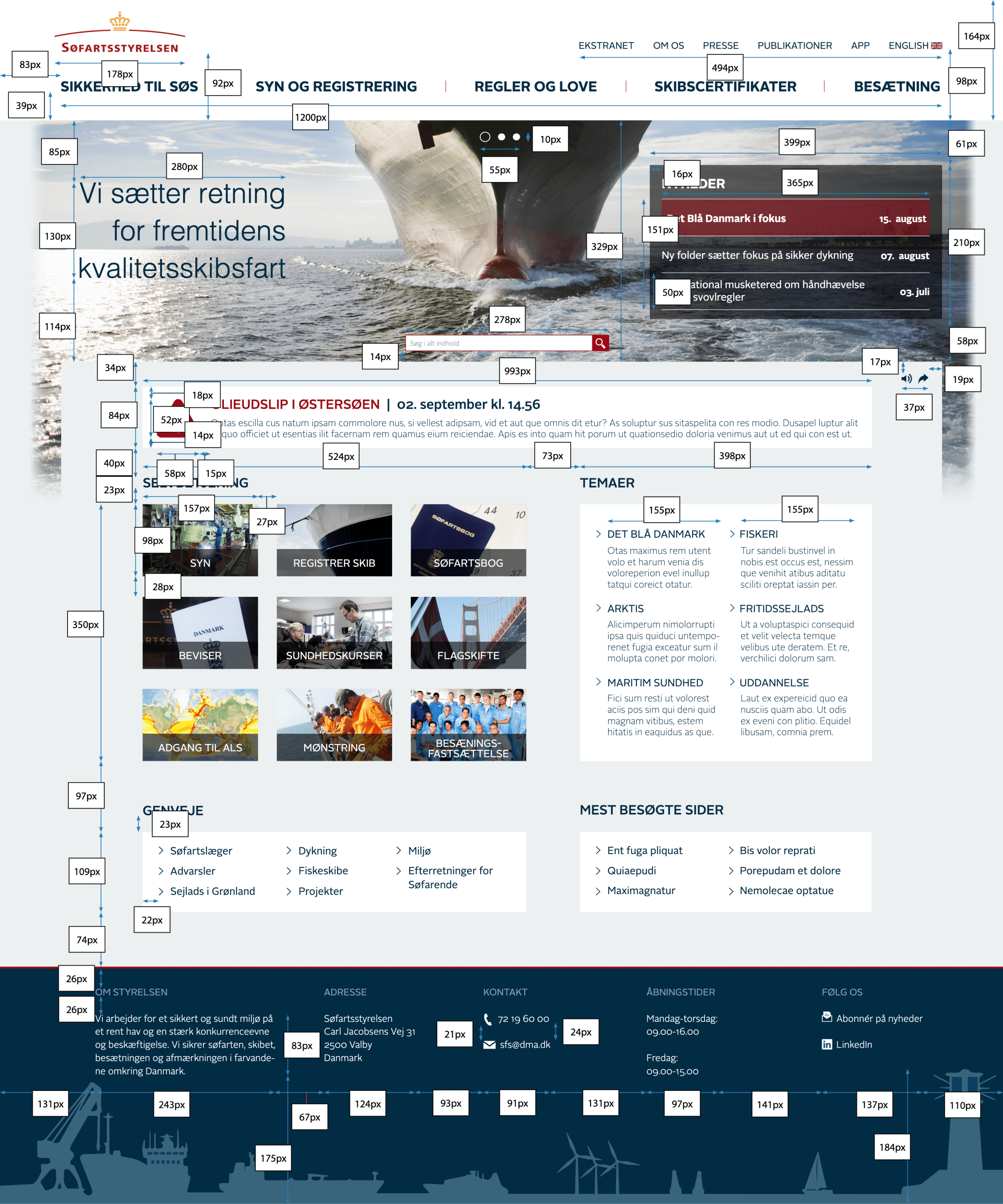
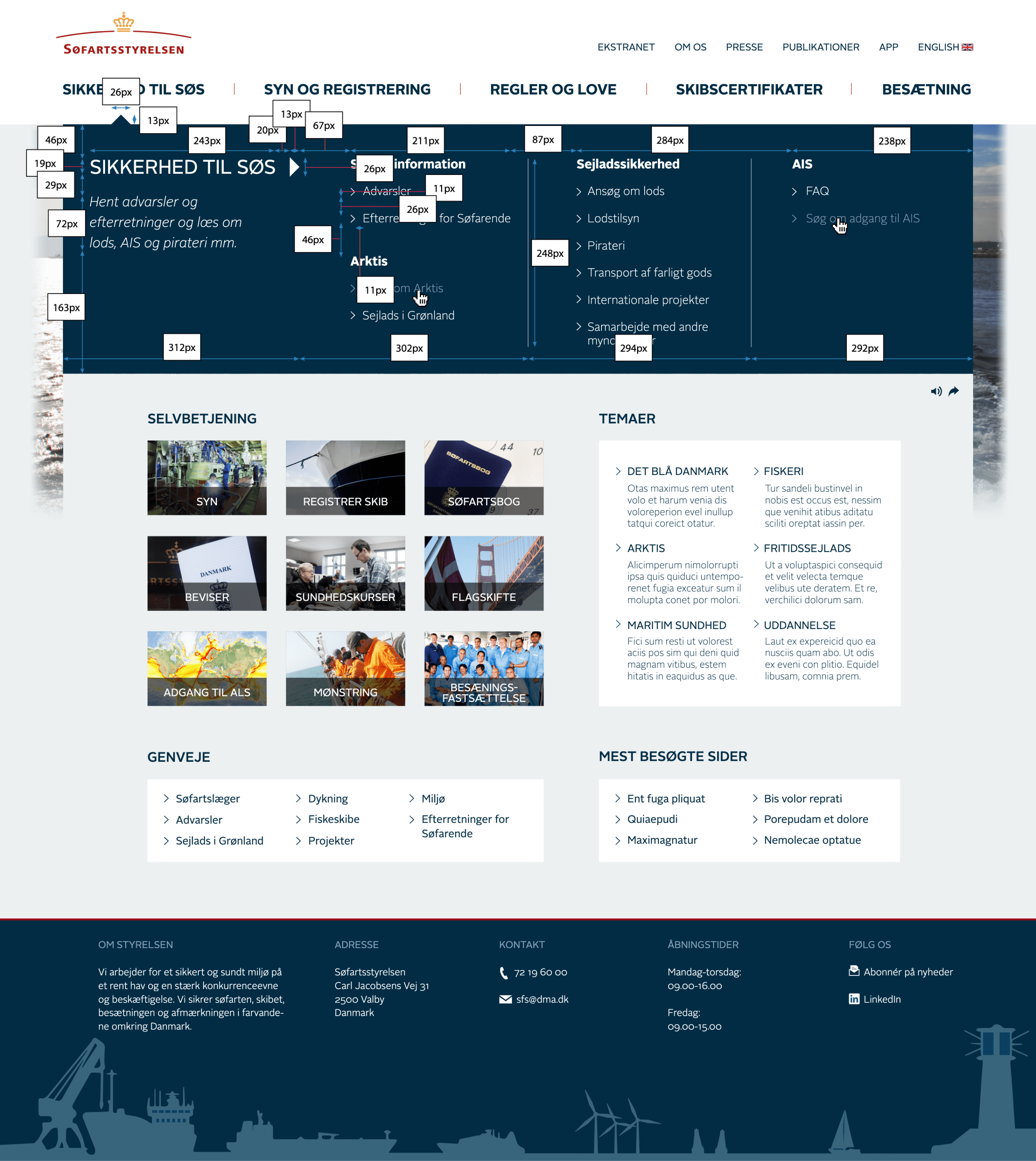
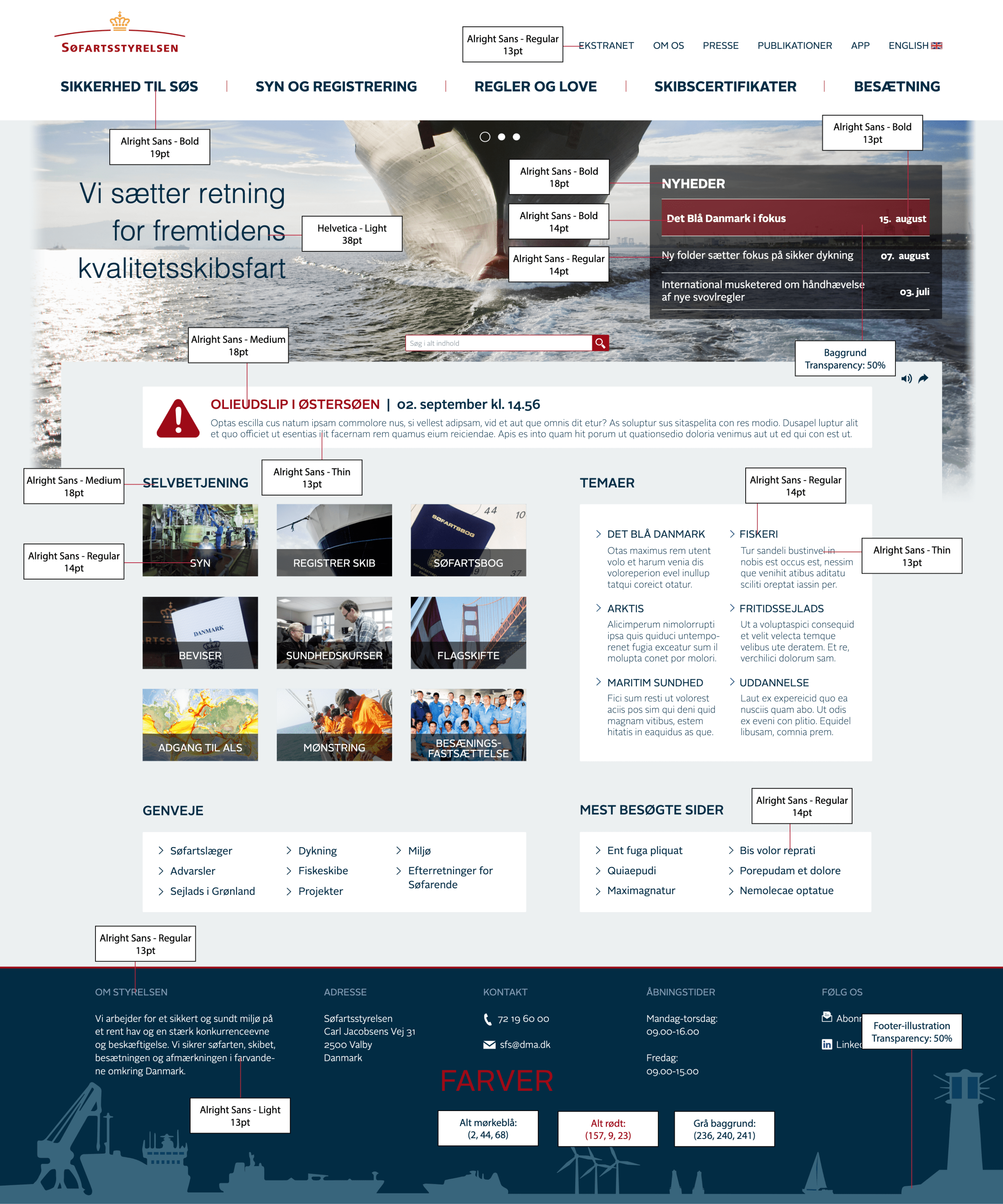
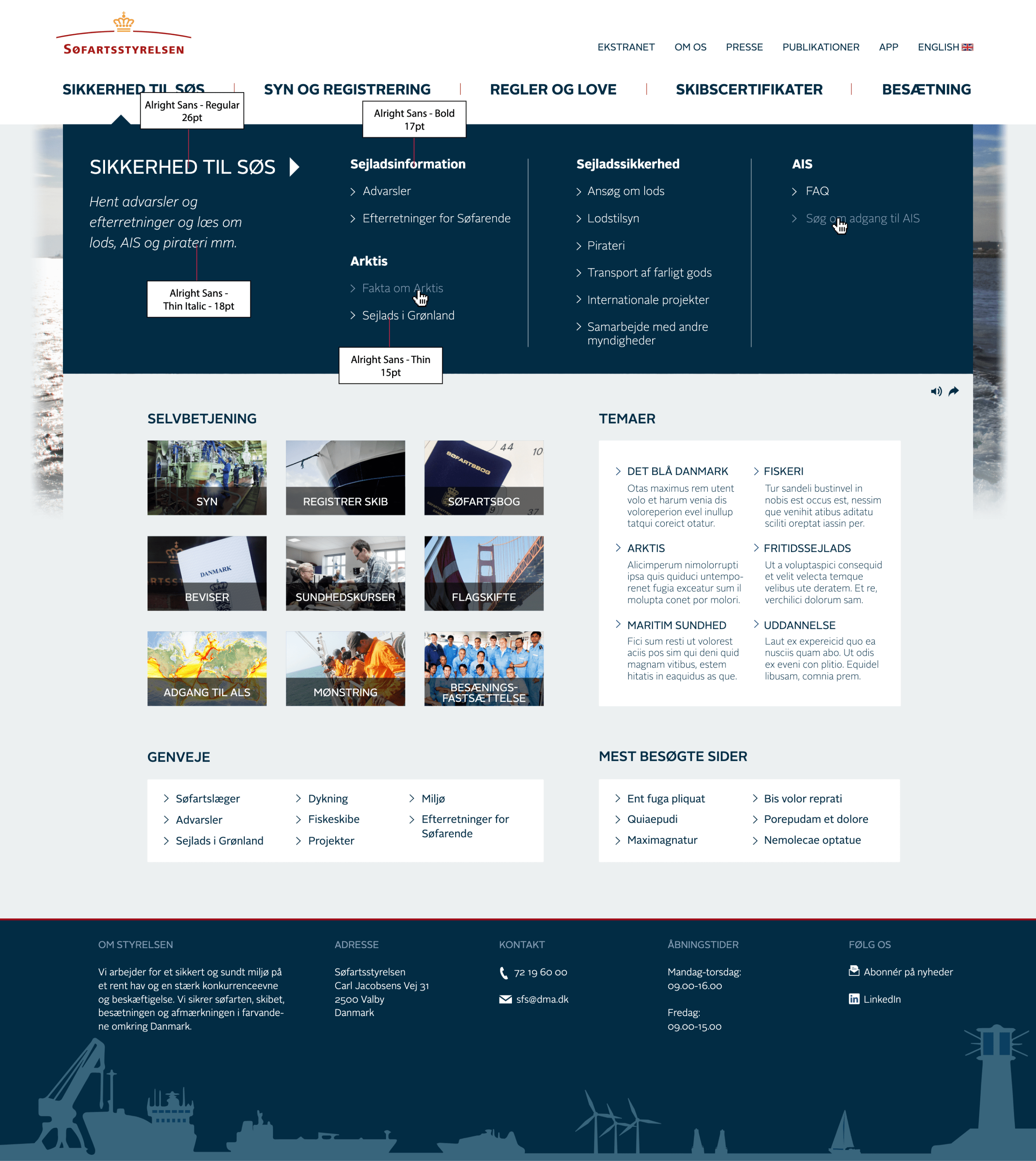
At this stage of my career, my workflow did not include tools like Sketch, InVision, or Zeplin, and this was also before tools like Figma became widely adopted. My design toolkit was limited to the Adobe Creative Suite, and all designs were created in InDesign and Illustrator despite these tools not being tailored for web design.
As a result, design specifications had to be communicated manually to developers without the ability to inspect individual elements. In hindsight, this was not the most efficient process, but it provided valuable experience in communicating design decisions clearly within technical constraints.
Project learnings
This was my first big client project as professional UX/UI designer. I gathered much knowledge about digital product development outside the world of academia, where especially time and money are key factors. I also became aware of the need to be pragmatic when the situation demands it, and the value of effective stakeholder management.
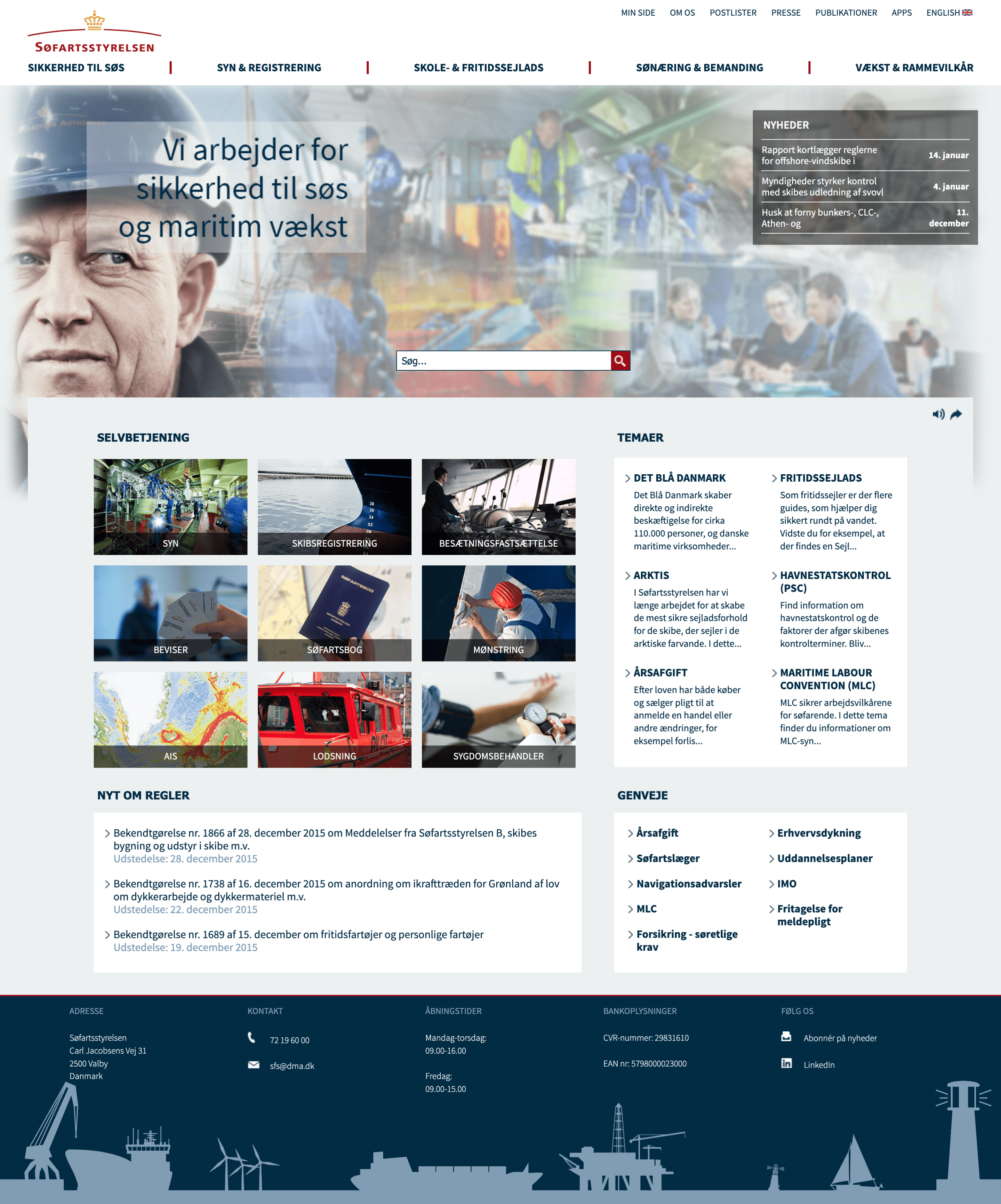
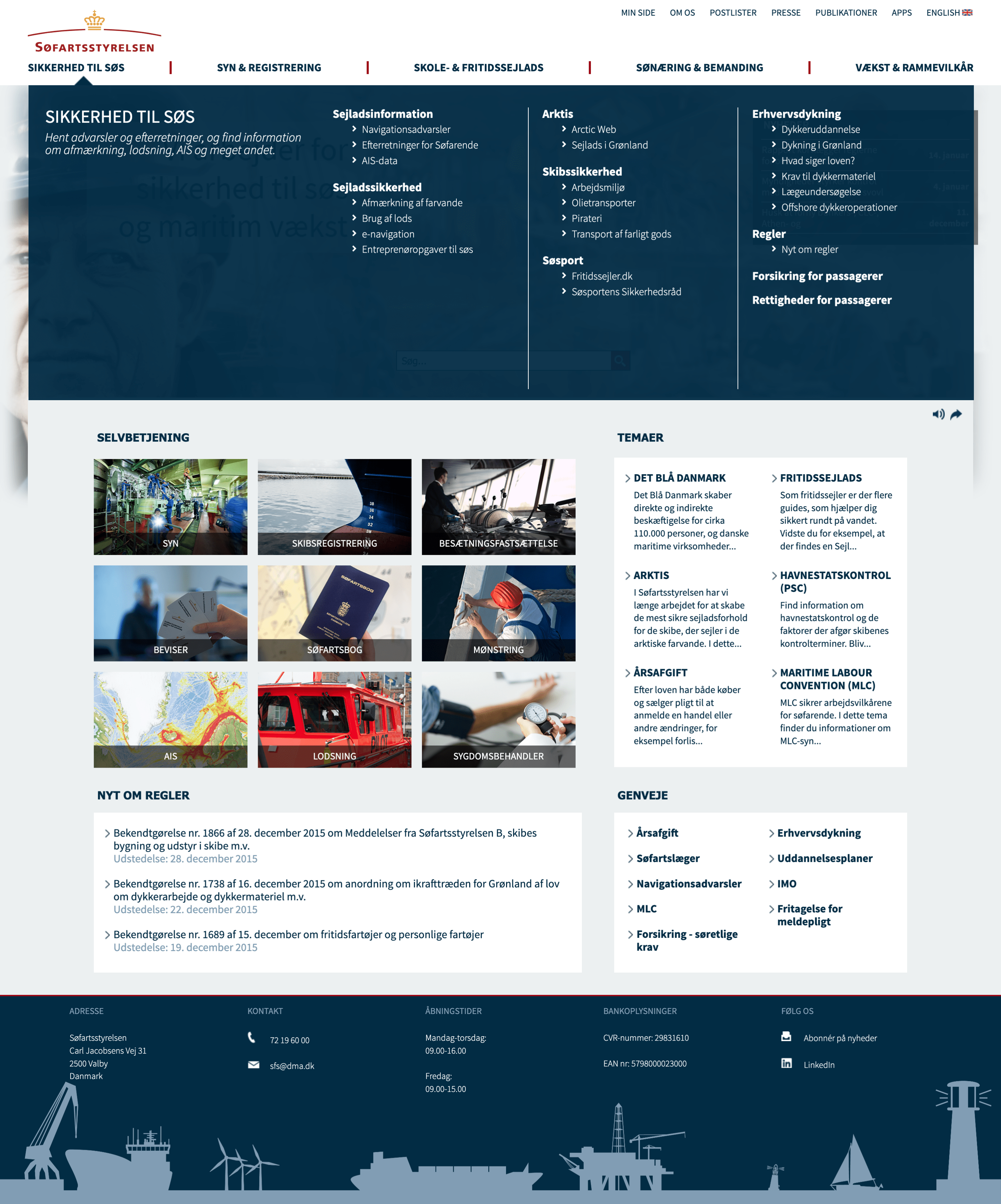
Screenshots of the launched website in 2015